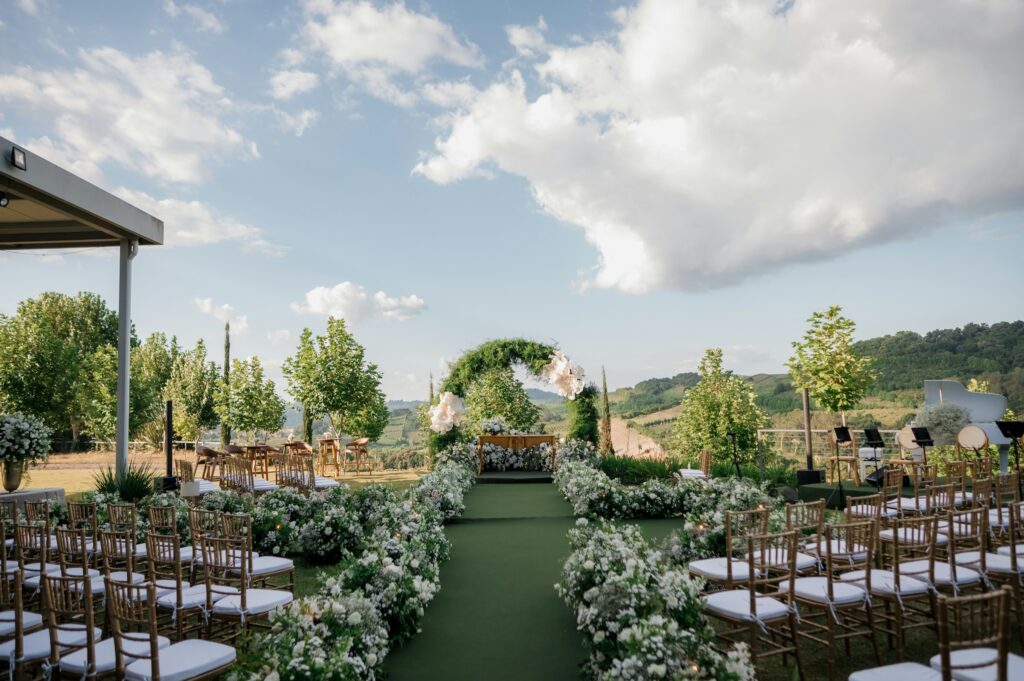
Selecting the venue is the first major decision that every couple will have to make for their wedding. In addition, it is the only factor that can set the budget in motion. If you get it right, all other things become easy. On the other hand, if you fail at it, you will end up trying to get the money back for the remainder of the planning timeline.
You aren’t alone if you’re wondering how to choose a wedding venue without blowing your budget. The venue and catering together constitute almost half of any wedding budget, making this the most influential decision of them all. This guide walks through exactly what to look at, what to ask, and where couples typically lose money without realizing it.
Start With a Real Number, not a Guess
Before you tour a single venue, get specific about what you can actually spend. Not what you hope to spend. Not what looks good on Pinterest. A real number.
According to The Knot’s 2026 Real Weddings Study, the average U.S. wedding now costs around $34,000. But that figure is skewed by a small number of very expensive weddings. Most couples spend far less, and plenty have beautiful weddings for a fraction of that number.
This is the part about venue shopping in particular: Your total budget will determine how much money you should spend on the venue itself. Many people make the error of falling in love with a certain venue and then trying to fit everything else into what’s left. Reverse the order of actions and establish the total amount, set up how much will be spent on the venue, and then go venue shopping.
An easy approach: You should spend between 30–40% of your budget on the venue and catering services. So if your budget equals $20,000, the venue budget would be somewhere from $6,000 to $8,000. Adjust from there based on your priorities.
How to Choose a Wedding Venue Without Overspending
Now that you have a number, your decision-making revolves around a few crucial variables. Take note of these in order of importance from a monetary standpoint.
Guest count first: This is the single most significant variable in terms of lowering costs. Venues will often bill based on the number of guests, and sometimes, will put a limit on the maximum capacity that, in effect, makes you choose the more expensive option should you exceed the minimum number even slightly. By trimming your guest count by as little as 15-20 people, you’ll save money right off the bat, without negotiating anything at all.
Venue type second: An all-in-one package includes not only your catering service, but also tables, chairs, and sometimes flowers. Barebones venues appear cheaper initially, but usually make you rent everything individually.
Day and season third: A Saturday wedding during peak wedding months (May to October) will cost you more than any other date that you choose. Going for a Friday or Sunday wedding, or having a wedding outside of the peak wedding period, could potentially reduce your costs by 15 to 30%, without changing anything else about your day.
Location fourth: The place where you hold the wedding could make all the difference in your overall expenses by tens of thousands of dollars. A wedding held in a metropolitan location will typically cost twice as much as a wedding in a smaller city or countryside environment. If your list of guests is willing to travel, then your search radius will be easy to expand to protect your budget.
Questions to Ask Before You Book
These are the questions that are often overlooked, but which can really affect your budget. Extra charges may be hidden and can add up quickly to your overall spending.Ask these questions on every single tour, even if you’re excited and ready to book on the spot.
- Is the quoted price the full price, or are service charges, gratuities, and taxes added on top?
- What’s included in the base rental fee — tables, chairs, linens, setup, and breakdown?
- Is there a required minimum spend on catering or bar service?
- Are there overtime fees if your reception runs late?
- Do you allow outside vendors, or am I required to use an in-house list?
- What’s the cancellation and rescheduling policy?
- Is there a rain plan included at no extra cost if the venue has an outdoor component?
Vendor restrictions are worth asking about early. Some venues require you to use their preferred florist, caterer, or planner, which can either save you money through a package deal or lock you into pricing you can’t shop around. Know this before you fall in love with the space.
Where Couples Save Without Sacrificing Style
Budgeting does not have to equate to having an unremarkable event. It simply involves making sure that you spend your money wisely on the right areas to be reflected on photos and through the guest’s perspective.
Décor is definitely one area where money can be saved without compromising on style and visual appeal. Flowers for the seasons tend to be less expensive compared to imported flowers out of season. A well-chosen arrangement can carry just as much visual impact as an expensive one. If florals are part of your venue decision, our guide to choosing tulips for weddings and events walks through affordable, in-season options that still photograph beautifully.
Timing your venue booking around related pre-wedding events can also help you plan more efficiently overall. If you’re weighing venue options that could double for a rehearsal dinner or a smaller gathering, it’s worth mapping that out alongside your other celebrations — including the bachelorette weekend, which often benefits from being planned early so costs don’t collide with your main wedding budget.
Once your venue and ceremony details are locked in, small finishing touches like a corsage or boutonniere add polish without adding real strain to your budget. These details are inexpensive relative to venue and catering but have an outsized effect on how put-together everything looks.
A Simple Way to Compare Venues Side by Side
It’s easy to forget what you thought about each place while you visit. As soon as you finish the visit at any particular venue, make sure to note the following:
- The total price, including all charges – rental, service, and required minimum
- What is included, and what is additional and needs to be rented separately
- The capacity of guests and how easily it accommodates your list
- Any date limitations or blackout periods
- Cancellation policies and deposit terms
- The overall vibe – does it feel like your wedding, or like something different?
That last one matters more than people expect. Yes, budget management is important, but just as important is choosing the venue that really speaks to you. The task is not to find the cheapest venue. The task is to find the most valuable venue for your budget.
Final Thoughts
The art of learning how to choose a budget-friendly wedding venue is all about ordering: get your number straight, know where the hidden costs lie, and have the numbers of guests and timing play to your advantage before falling in love with an unaffordable venue. It’s simply a matter of doing the calculations ahead of time, asking some pointed questions during each tour, and enjoying your big day without any bills hanging over you.
Your venue will determine the vibe of everything else. Pick wisely, and you’ll find that the other aspects of your planning become a little easier from there on out.