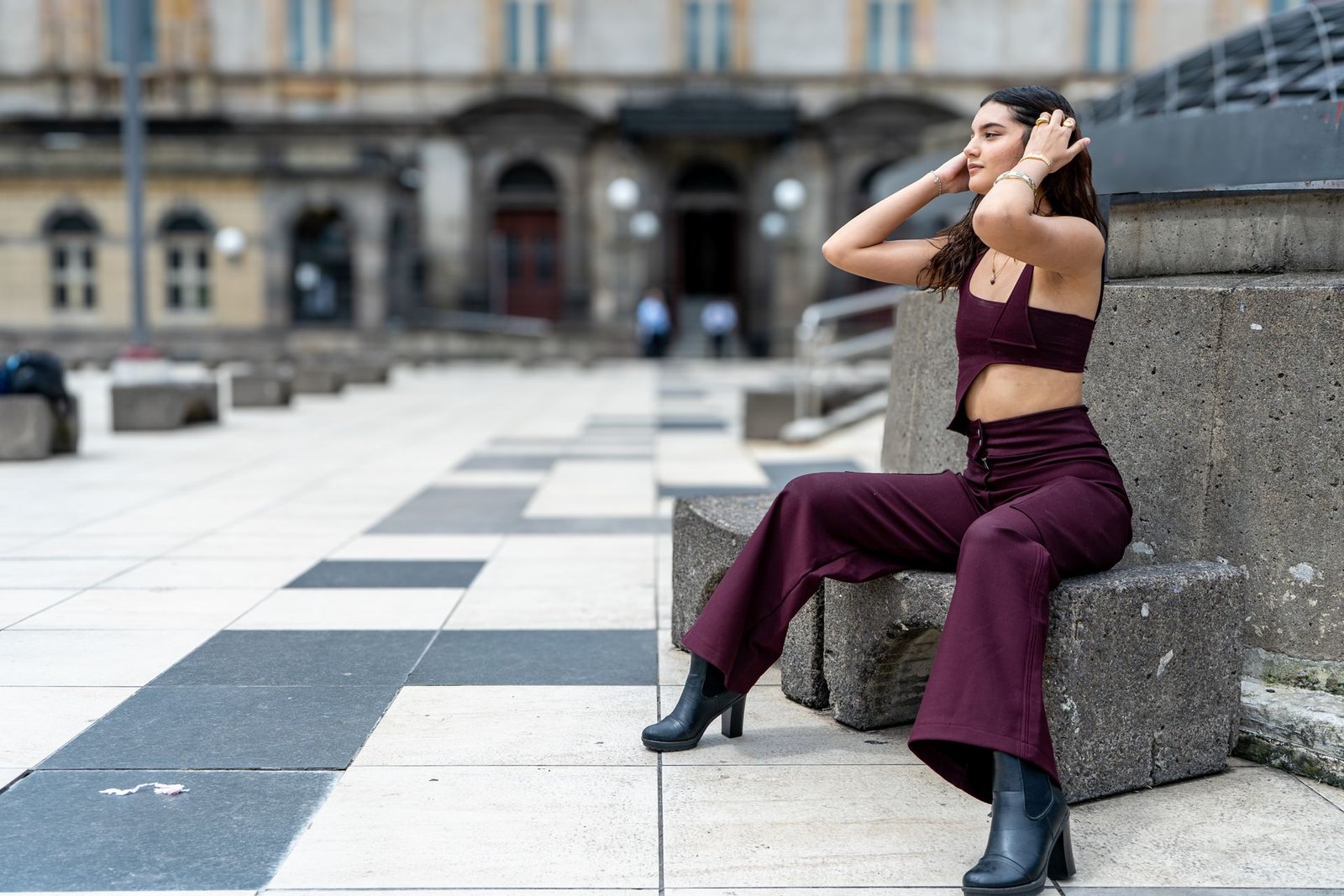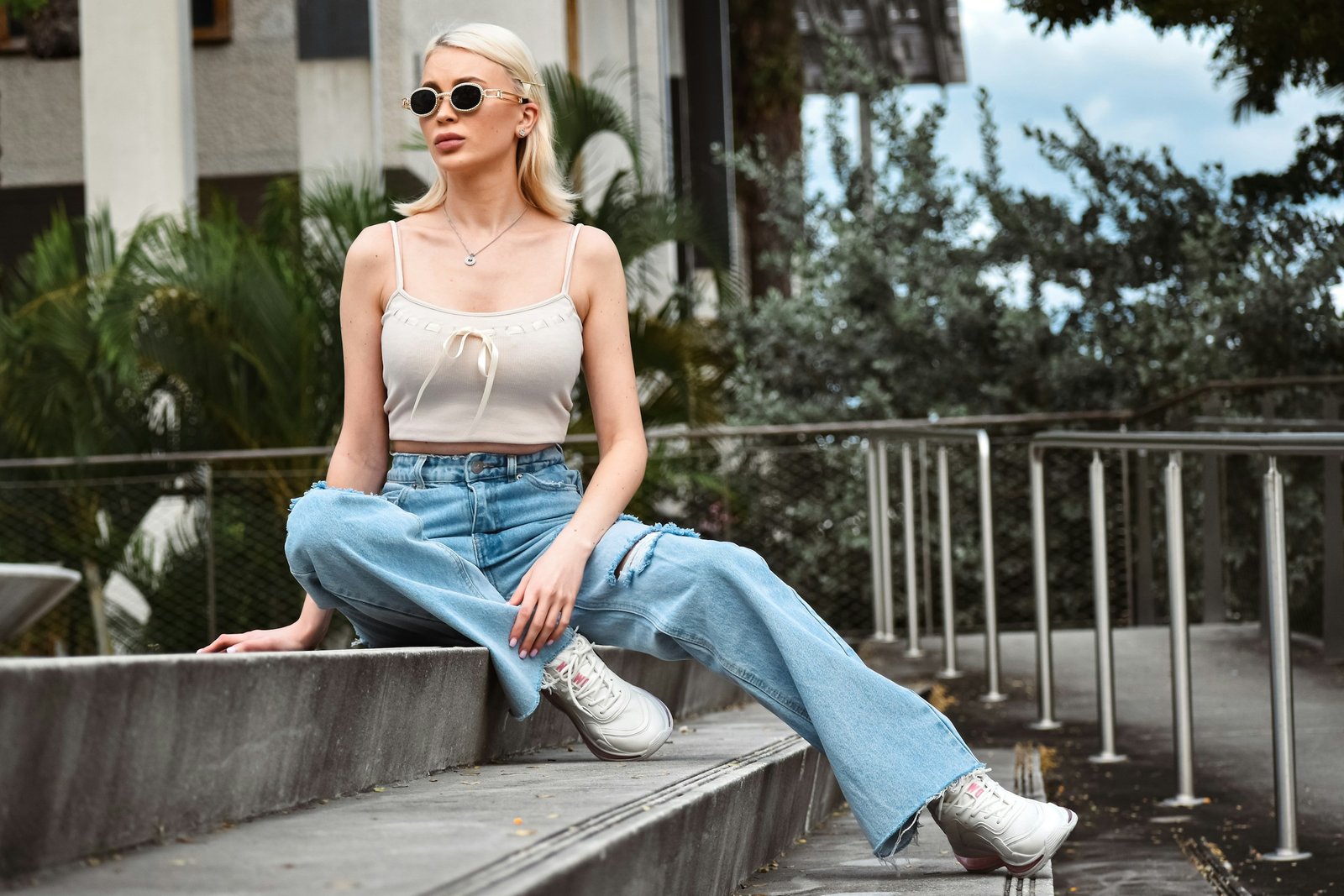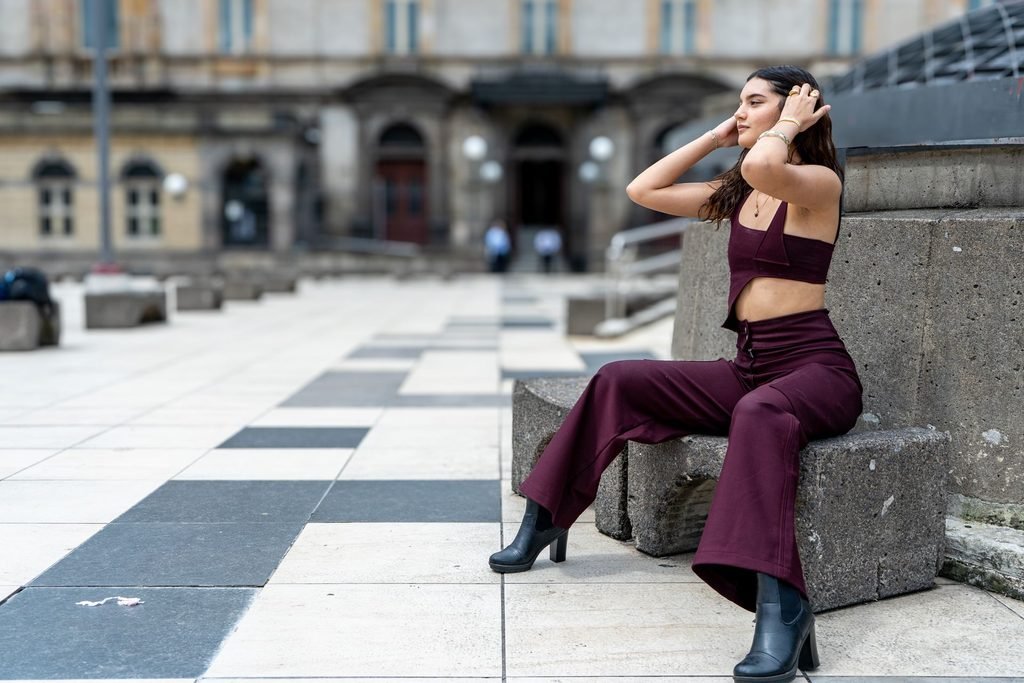
A fitted top works with wide-leg pants for one simple reason: it gives the outfit a top half before all that fabric below takes over. Skip it, and the whole thing can turn into a loose shape with no real waist. Get it right, and the same pants suddenly look chosen.
Here’s why, and how to actually do it.
Wide-leg pants aren’t quiet. They swing when you walk, they add width past the knee, and they change how your whole body reads from across a room. So if your top is loose too, there’s nothing left to show where you actually are under all that fabric. A fitted top fixes that. It doesn’t need to be tight, just close enough to mark your waist. That’s really the whole trick.
Think about how a quilted jacket works over wide-leg pants once it’s cold out. Structure up top, room below. Same idea here, just without the jacket.
Fabric weight is the part people skip
Not every fitted top goes with every pair of wide-leg pants. Heavy pants, think wool, denim, thick cotton twill, need a top with some backbone to it. A poplin shirt. A ribbed knit. Something with enough body that it doesn’t just disappear next to all that fabric. Put a flimsy tank under heavy trousers and it can look like an afterthought.
Lighter fabrics flip that. Linen, silk, rayon, anything with drape wants a softer top on top, not a stiff one. A silk cami. A lightweight knit that actually moves. A structured blouse over flowy linen pants tends to look like two different outfits got stuck together.
Not sure which category you’ve got? Pick the pants up. If they hold a crease and feel like something, they’re heavy. If they fall and move when you shake them out, they’re light. That’s it.
What to actually reach for
A ribbed tank is the easy answer. Clean vertical line, works great with a high-waisted pant since the ribbing marks your waist without needing to be cropped. Good for summer, or layered under a sweater once it’s cold.
For work, a fitted button-down, buttoned all the way or with the top two open, does more work than almost anything else in a closet. Tuck it fully for something clean. Half-tuck it if you want a little less polish.
Cold weather calls for a fitted turtleneck. It keeps things narrow up top without adding bulk, which matters a lot when the pants are already handling volume on their own. It’s the same logic behind why corduroy pants work so well through fall.
A bodysuit solves a real problem, which is a shirt working itself loose from the waistband by 2pm. There’s no hem to escape from in the first place.
And a cropped sweater, if the waist on your pants sits high enough to handle it, shows a small strip of skin and keeps things from getting swallowed by all that fabric below the knee.
One more that gets overlooked: a simple wrap top. The tie at the waist does the shaping for you automatically, no guessing about fit, and it adjusts as the day goes on in a way a fixed-fit top can’t. Not the most exciting option on this list, but reliable in a way that matters more once you’re actually getting dressed at 7am.
Office, weekend, or dinner out, the formula barely changes. Fitted top, low heel or loafer for the office. Fitted tee, sneakers for every day. Silk or satin version of the same top for evening, paired with a heel. Same shape, different fabric.
Color and print, briefly
A solid top in the same tone as the pants, or close to it, tends to make the whole outfit look taller since there’s no visual break at the waist. Camel on camel. Black on black. It works.
Print is trickier. Keep it to one half of the outfit at a time. Patterned top with solid pants, or the other way around. Two patterns fighting each other rarely helps, especially with pants that already take up this much visual space.
Height changes the math
If you’re petite, skip the long, untucked top. A cropped piece or a full tuck works better, since extra length up top eats into your leg line right when the wide-leg pant is trying to lengthen it. High-waisted pants help here too, for the same reason.
Taller? You’ve got more room. A longer fitted top and a half-tuck read fine on a taller frame in a way they don’t on a shorter one. The one thing to actually check is length: fitted through the body, but long enough that it doesn’t ride up the second you sit down.
None of this is about hiding anything, for what it’s worth. It’s just giving the outfit one clear point of reference before the pants take over.
Body type matters less here than fit do. A boxier fitted top on a curvier frame still reads as intentional as long as it actually follows the body underneath, rather than sitting stiff and shapeless. The same goes in reverse: a very snug top on a smaller frame doesn’t automatically look better just because there’s less fabric. Fit is the variable, not size.
Don’t forget the shoes
A great top won’t save an outfit if the shoe is wrong. Wide-leg pants already cover most of the foot, so whatever’s visible at the hem has to hold its own. A pointed flat or low heel stretches the leg line. A chunky sneaker works too, casual version of the same thing, as long as the hem isn’t so long it swallows the shoe.
Heel height changes hem length, too. Higher heel, slightly shorter hem. Flat shoe, longer and fuller pant. Try the pants on with the actual shoes before deciding on a length. Saves a trip to the tailor later.
It’s a small step people skip because it feels unnecessary in the fitting room, standing there in socks. It isn’t. The whole proportion of the outfit shifts by an inch or two depending on what’s on your feet, and that’s usually the difference between a hem that looks intentional and one that just looks long.
Where people go wrong
Going looser on top because the pants already feel like a lot, that’s the most common mistake, and it usually backfires. Loose on loose just erases the outfit.
Over-tucking a top that’s too short is the second one. It pulls everything upward and can cut across the torso in an odd spot. If a top barely clears the waistband, leave it out.
Third: the ankle. A pant that pools at the shoe pulls the eye straight down to the extra fabric bunched on the floor, no matter how good the top looks. A slight break, or a hem that just skims the top of the foot, keeps things clean.
Nail the waist, match the weight, watch the hem, and one pair of wide-leg pants can carry an office day, a weekend, and a dinner out without needing three different pairs to do it.
Worth saying too: none of this requires new clothes. Most closets already have a ribbed tank, a button-down, or a turtleneck sitting somewhere in a drawer. The wide-leg pants are usually the newer piece. The top was probably there the whole time, just paired with the wrong thing.