The best haircuts for fine hair usually have a blunt, even edge, a length at or above the collarbone, and only light layers inside. The edge makes the ends look thicker, and the shorter length keeps strands from lying flat. Below are seven cuts built on that idea, from shortest to longest, plus four to skip.
Fine hair means each strand is narrow. It says nothing about how many strands you have, which is density. You can have a full head of fine hair or a sparse head of coarse hair, and the right cut depends on which one you’re working with. Most of what follows suits both, and we flag the spots where it doesn’t.
What fine hair needs from a cut
Fine hair loses to gravity. Each strand is light and narrow, so it lies flat against the scalp, and the ends look wispy once the hair gets long. A good cut works against both problems.
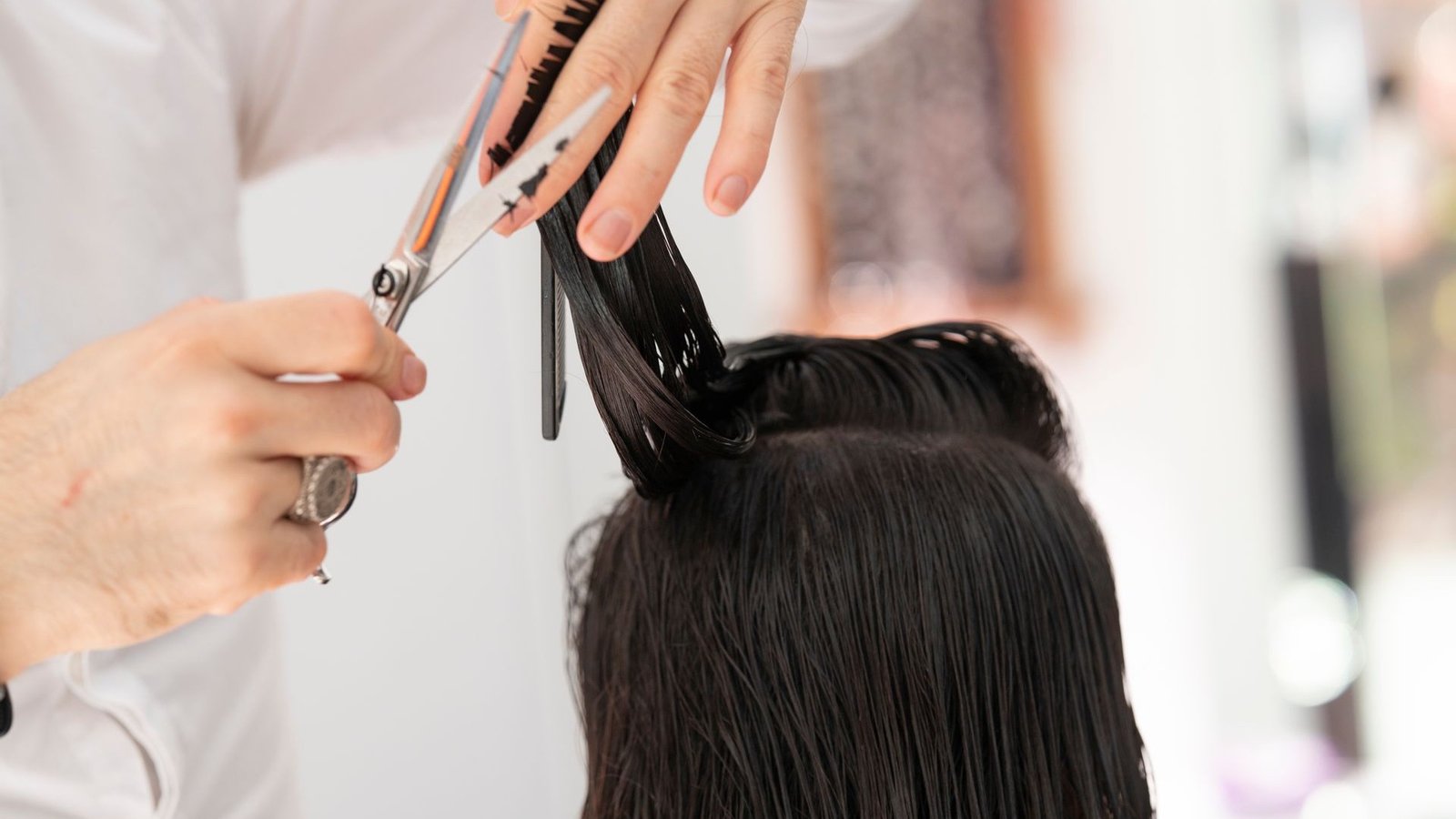
A blunt edge helps most. When the ends are cut straight across, they stack into one solid line, and that line reads as thickness. Ends that are thinned, feathered, or cut at many different lengths let light through and look sparser.
Length comes next. The shorter the distance from root to end, the less weight pulls on each strand, so fine hair holds a shape better at chin or collarbone length than past the shoulders. That doesn’t mean you have to cut it short. It means the longer you keep it, the more the cut has to do.
Textured pixie
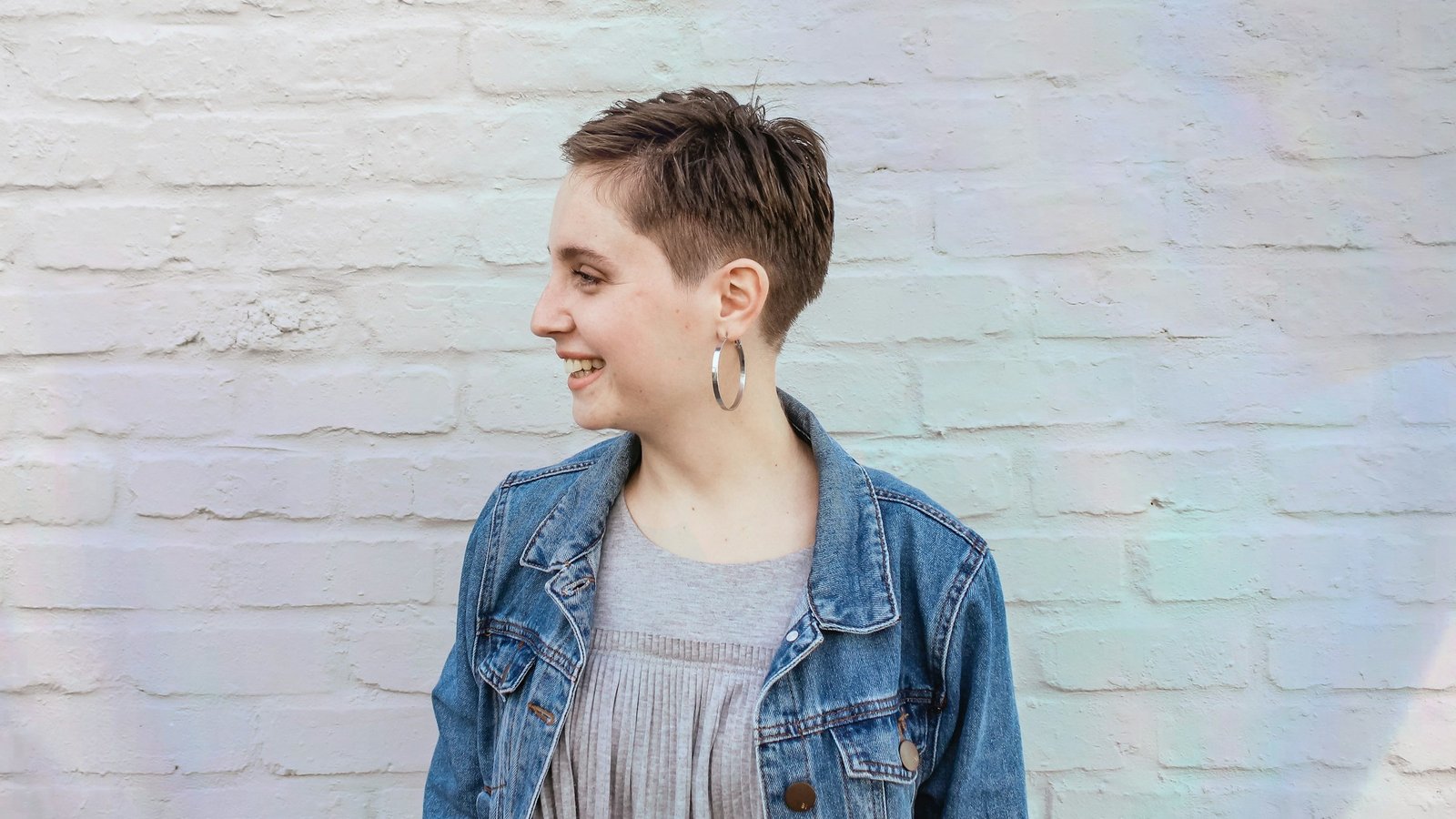
The textured pixie is the shortest cut here, and it suits fine hair because there’s no length to drag the hair down. The sides and back stay close, and the top keeps a little extra length so you can lift it at the roots.
Ask for the texture on top to be cut in with point cutting instead of thinning shears, and keep the crown a bit longer than the sides. A small amount of mousse or texture spray at the roots does the rest. If you’re not sure how to wear it day to day, our long pixie cut styling tips cover crown volume and how to keep a pixie from falling flat.
Bixie
The bixie sits between a bob and a pixie. It has short, layered pieces at the crown and a bit more length around the ears and nape. You get more movement than a pixie gives and more lift than a bob, and the longer top can sweep to the side or fall across the forehead.
Keep the layers short and few so the outer edge stays dense. Our bixie haircut ideas show the main versions, including the textured one that works well on fine hair.
Blunt bob
If you only try one cut from this list, make it the blunt bob. It’s cut at the chin or just below, with one even line all the way around, and it’s the clearest example of the blunt-edge idea. The ends look dense, the hair swings when you move, and there’s very little to style.
A center part or a deep side part both work. Ask your stylist to keep the length even from back to front instead of angling it forward, and to skip thinning shears at the ends. Our guide to boyish hairstyles covers the boy bob, a slightly messier take on the same cut.
Soft A-line bob
The A-line bob haircut is one where the back of the haircut is cut slightly shorter, while the front of the cut is slightly longer, and this means the hair will point towards the face.
Be careful to keep the angle fairly small. If the angle is steep, it will mean having to cut a lot of hair away from the back, making it look thin. If it’s straight or slightly wavy, it will show the shape most effectively.
Collarbone lob
Lob is long bob that falls somewhere in between shoulders and clavicle area. It’s a good transition hairstyle for those who find regular bob too short as you still have the option to pull hair back. The cut needs to be kept blunt, with the shape coming in form of several long layers framing your face.
In this length, fine hair maintains its line and volume. In case of straight hair, it will require only parting and styling with flat iron.
Shoulder-length with invisible layers
Invisible layers are cut inside the hair, underneath the top layer, so the outside still looks like one smooth length. They add lift and movement without taking weight off the ends, and the ends are the part fine hair can’t spare.
Ask for this at shoulder length, with a blunt edge and layers you can’t see from the front. If you want to see how visible layers look at other lengths, our layers haircut ideas are a good place to start. With fine hair, pick the softer, longer versions.
Long hair with a blunt edge
Long hair is the hardest length for fine strands. The weight pulls everything flat, and the ends turn wispy. If you want to keep your length, keep the ends blunt and trim them often, and add a few face-framing pieces for shape instead of layering the whole head.
A light fringe helps too. It uses hair from the top of your head, so it adds fullness near the face without costing you length. Our wispy bangs guide explains how to ask for one that stays soft.
Four cuts to skip
Avoiding the wrong cut matters as much as picking the right one. These four tend to work against fine hair.
Heavy choppy layers are the first. The wolf cut and the butterfly cut get their shape from lots of short layers, and fine hair doesn’t have the bulk to hold that shape. You end up with thin, see-through ends. If you love the look, ask for fewer and longer layers. Our posts on the wolf cut and the butterfly cut vs. the wolf cut cover how each one is cut.
Then we have thinning shears and razor-cut ends. These reduce the bulk and taper the ends until there is none left. This may work well on thick hair but takes away the one thing you need from your fine hair. Request your stylist to opt for scissors and point cutting.
One-length long hair below shoulder level is the third mistake. The lack of shape and design causes it to pull down due to its own weight, making the ends appear stringy. If you do not wish to get it trimmed, stick to blunt cut and soft face-framing mentioned above.
The last is heavy curtain fringe. A great deal of hair is taken out from both top and sides, leaving little hair for all the other styling and cuts.
What to tell your stylist
Cut descriptions work well in salons, not cut names, so explain what you want your hair to do. “Blunt ends, no thinning scissors” covers the edge. “Light layers within, nothing visible from the front” covers invisible layers. “Just above the collarbone” is an example of length.
Next, be honest about your time investment in styling each morning. If your cut will take daily styling with a round brush, it will not last if you never pick one up. Bring along a picture of your desired shape, preferably on someone with similar hair texture to you.
Styling and upkeep
Fine hair goes flat fast, so put the effort at the roots. Blow-dry them first, lifting with a round brush or your fingers, and flip your part to the other side while the hair is damp for extra lift. Keep products light. A small amount of mousse on damp hair or a texture spray on dry hair adds grip, while heavy creams and oils weigh the strands down.
Washing plays a part too. Fine hair picks up oil quickly, so it often looks flat the day after a wash. Our guide on how often to wash your hair can help you find your own number, and if product buildup is part of the flatness, our clarifying shampoo picks are worth a look.
Book a trim every six to eight weeks. A blunt edge only works while it’s sharp, and frayed ends make fine hair look thinner.