You’ve finally become a blonde! Or perhaps you’ve always had that silver look going on. Regardless, someone suggested that you get yourself a purple shampoo and you got it. However, somehow, it turns out that your hair has remained brassy! And at worst, your hair has turned lavender. Something you definitely did not bargain for!
Ring any bells?
Rest assured, you are not alone. This product is quite easy to abuse despite its straightforwardness. The best part? When you know what mistakes to avoid, it becomes pretty easy! Here’s how to do it.
What Does Purple Shampoo Actually Do?
Before we discuss the common pitfalls, let’s quickly go over some basics first.
Purple shampoo comprise of violet pigments, which happen to be directly opposite to yellow and orange colors on the color wheel. By applying the former to yellowish or brassy hair, you can cancel out one tone with another one and get your hair color more radiant and cool.
Seems like too simple an idea? That’s the reason so many women miss it.
Mistake #1: You’re Using It Like Regular Shampoo
This is the most prevalent error, hands down.
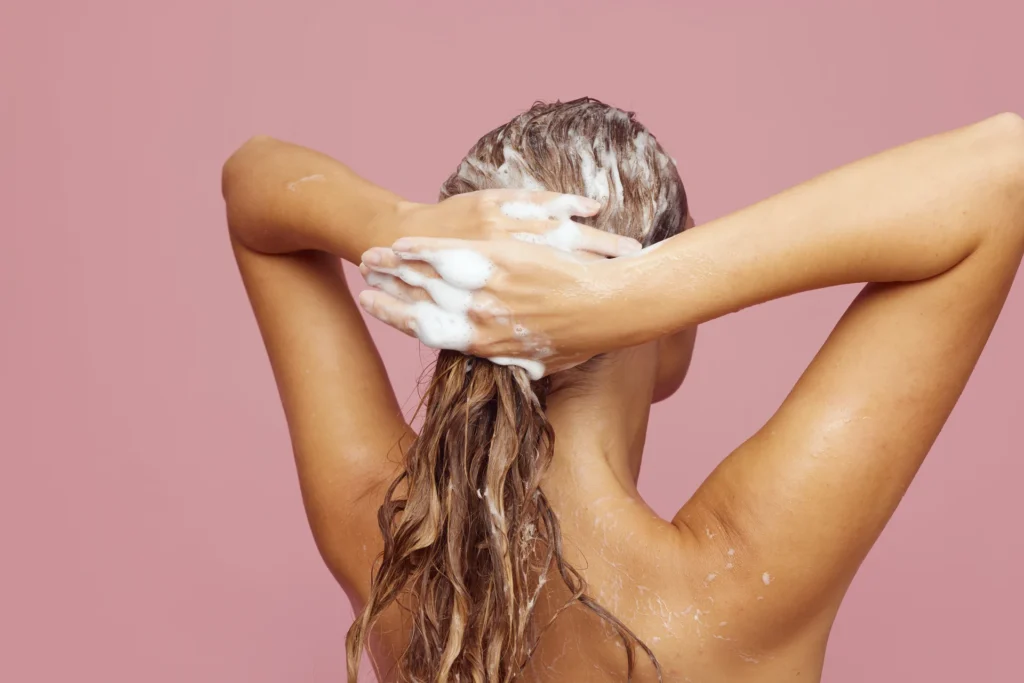
People get all soaped up and rinse their hair within 30 seconds, then wonder what happened. Purple shampoo works primarily as a toner, followed secondarily as a shampoo. It takes time to do its magic.
When dealing with mild brassiness, 3 to 5 minutes will suffice. For more yellow tones that require toning, you can spend up to 15 minutes. More time equals more toning action.
It would be best to start with a lower amount of time and gradually increase it as needed.
Mistake #2: You’re Not Using It Often Enough — Or Using It Too Much
However, there is a limit that should be taken into consideration, and most of the time, people tend to fall into either one extreme or another.
In case you apply your purple shampoo too rarely, the toning effect will be barely noticeable. The build-up of brass becomes inevitable after being exposed to the sun rays or washing your hair very often.
Should you apply the shampoo every day, you would over-tone it and make it appear ashy, dull, and gray or give it an unnatural violet shade.
To keep your hair at bay and achieve the desired result, you better use the product once or twice a week, while using any regular and moisturizing shampoo on all other days. To choose the most suitable option of daily shampoo for your particular hair type, refer to this helpful guide on shampoo and conditioner selection by hair type.
Mistake #3: You’re Applying It to Dry Hair
Others prefer applying the purple shampoo on dry hair for getting a more toned result. It sounds like a rational approach but, in practice, it is often counterproductive.
The uneven absorption process leads to an uneven application of the color. You may obtain a streaky look due to some parts becoming very purple while others remaining untoned.
It is always better to apply the purple shampoo on wet hair. This way, the absorption will be even, providing a better effect.
Mistake #4: You’re Skipping the Conditioner
Purple shampoos are known to be dehydrating. The vast majority of them remove natural oils from hair while depositing color. By not using a conditioner after purple shampoo application, you will have beautifully toned hair that is dehydrated, fragile, and prone to breakage.
It is vital to use moisturizing conditioners afterward. In case your hair is prone to dehydration or damage, a leave-in conditioner should be used – it makes a tremendous difference. Especially in the case of wavy or curly hair, this is an obligatory step. Have a look at this comparison between a leave-in conditioner and a curl cream.
Mistake #5: You’re Using the Wrong Formula for Your Hair
Not all purple shampoos are created equally. Not all blonde hair colors are alike.
If you have platinum or silver blonde hair that’s extremely pale, you’ll want a formula packed with pigments, which will be effective at counteracting the intense yellow tones. In the case of golden or honey blonde hair color, a lighter formula will get the job done.
Applying an intensely pigmented purple shampoo to extremely light or white blonde hair is likely to leave behind a purple tint. Unless that’s what you were going for, it’s probably not what you had in mind.
Be sure to read labels carefully before purchasing to find the appropriate formula for your particular hair color.
Mistake #6: You’re Only Focusing on Specific Sections
The emphasis tends to be entirely placed on the brightest areas, typically in proximity to the face and/or hair ends. But the purple shampoo would prove most effective if it is distributed evenly in the hair.
Apply the product from the scalp through the mid-lengths to the tips of the hair strands. In case you have curly or thick hair, use a wide-toothed comb to ensure even distribution. Otherwise, the contrast between the areas where the color was toned and those where it wasn’t could only exacerbate the effect.
Mistake #7: You’re Ignoring Your Water Type
It’s sure to shock you.
The reason behind the brassiness is that hard water is rich in minerals such as calcium and magnesium. Gradually, these minerals accumulate on your hair and make your strands appear yellow and dull, giving rise to the look similar to brassiness. The fact of the matter is that even a weekly application of purple shampoo will not eliminate this issue since the cause is due to mineral buildup and not brassiness.
In case you have noticed that despite all your efforts, the brassiness keeps resurfacing, try using a chelating shampoo monthly.
Mistake #8: You Haven’t Found the Right Shampoo Routine Overall
Purple shampoo is only one aspect of the picture. If the rest of your hair care regimen isn’t working, it will work against you when it comes to toning your hair color.
Too much shampooing washes away hair dye more quickly. Frequent use of the incorrect clarifying shampoo has the same effect. And let’s not forget that your oil-producing scalp contributes as well. Should you have a scalp that produces lots of oils easily, this will influence how the color looks in your hair. Understanding how to control your oiliness is key to excellent color, which is why you might find this article on good shampoos for oily hair useful.
Constructing a full hair regimen based on your specific needs is key to success.
Quick Reference: Are You Making These Mistakes?
Here is a quick checklist to run through before your next wash day:
- Do you leave the purple shampoo on for at least 3–5 minutes?
- Are you using it only once or twice weekly?
- Are you using it on wet rather than dry hair?
- Do you use a conditioner after?
- Does the product you use suit your blonde hair color?
- Are you applying it evenly throughout your hair?
- Have you treated your hair for hard water deposits?
If you answered no to any of these, you have found your solution!
The Bottom Line
Purple shampoo is truly one of the best for toning your hair at home. However, as with anything else, you need to apply it properly in order for it to work well. The most common issues with purple shampoos are using them too quickly, using them too much or too little, and not using them as toners but simply as regular shampoos.
Patience and attentiveness are key. You should adjust how often you use your purple shampoo based on what your hair needs, and always use conditioner afterward.
Your hair will definitely reward you with stunning color!