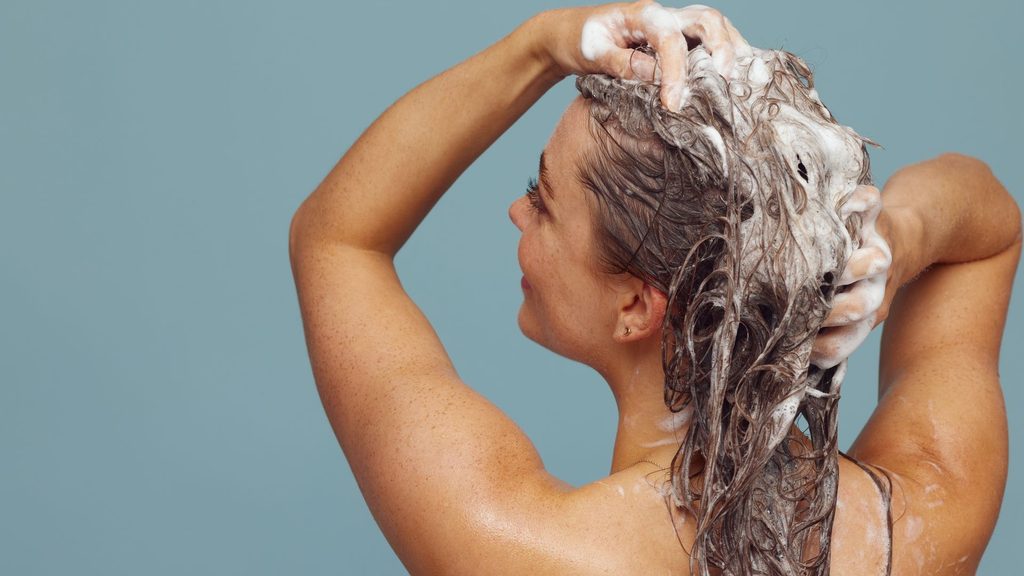
There’s no single right answer to how often you should wash your hair — but there is a right answer for you, and you can find it without guessing. Most people land somewhere between washing daily and washing every two weeks, and where you fall depends on three things working together: your hair type, your scalp’s oil production, and how much your daily life dirties or sweats up your hair. Layer those three, and a vague range turns into an actual number.
Why “It Depends” Isn’t Really an Answer
Search this question and you’ll get the same shrug from almost every source: it depends on your hair type. True, but incomplete. Two people can have identical curl patterns and need completely different wash schedules — one works out five days a week and lives somewhere humid, the other has a desk job in a dry climate. Hair type sets the starting point. It doesn’t finish the job.
Dermatologists at Cleveland Clinic have pointed out that hair type, scalp condition, and even age all factor into wash frequency, since oil gland activity naturally slows as people get older. Researchers at TRI Princeton, a hair and skin science institute, have studied this question for decades and still frame it as two competing camps rather than a fixed rule. If the experts researching this professionally won’t commit to a single number, the honest move is to give you a way to calculate your own.
Factor One: Your Hair Type
Hair type determines how fast oil travels from your scalp down the strand, and that’s the biggest single lever on wash frequency.
Fine or thin hair has less surface area to absorb oil before it looks weighed down, so these strands often need a wash every one to two days.
Medium-textured hair usually holds up for two to four days between washes before it starts looking flat at the roots.
Thick or coarse hair can often stretch to five days or even a full week, since the oil has farther to travel and the strands themselves hide it better.
Curly and coily hair tends to need the longest gaps — anywhere from five days to two weeks — because the twists and bends in the strand physically slow oil distribution, and because curl patterns are more prone to dryness and breakage from frequent washing. If you’re working with tighter coils, understanding your specific curl pattern changes how much stretch you can realistically get between wash days.
Factor Two: What Your Scalp Is Actually Doing
Hair type gets you a range. Scalp condition narrows it.
An oily scalp overrides almost everything else on this list — even someone with thick, coarse hair will need to wash more often if their scalp runs oily, because the issue isn’t the strand, it’s the gland underneath it. If roots go flat and shiny within a day no matter what you try, a shampoo built for oily scalps is a more useful fix than just washing more often, since the right formula can actually stretch the gap between washes instead of shortening it.
A dry or sensitive scalp works the other direction — stretch the gap, and when buildup does creep in from styling products or dry shampoo, reach for a clarifying formula occasionally rather than defaulting to more frequent regular washes, which tends to dry things out further without solving the underlying buildup.
Age plays a quieter role here too. Oil glands are more active earlier in life and slow down over time, which is part of why a wash schedule that worked in your twenties can start to feel like overkill a decade later.
Factor Three: Your Actual Life
This is the factor most guides skip entirely, and it’s often the deciding one.
Sweat changes the math regardless of hair type. Daily workouts, a physically active job, or a hot, humid climate all push scalp toward oilier and dirtier faster, sometimes enough to override what your hair type alone would suggest. Heavy product use — styling creams, dry shampoo, oils — adds residue that a light rinse won’t fully clear, which shortens the realistic gap between real washes even if your scalp itself isn’t especially oily. And if you’re wearing protective styles or minimizing manipulation for length retention, the calculation shifts again toward washing less often and more gently.
Putting the Three Factors Together
Here’s where the framework actually earns its keep — three quick examples of how the math changes when you stack all three factors instead of just one.
Someone with fine hair and an oily scalp who works out most mornings is probably washing daily, maybe every other day at most — hair type and scalp condition are both pushing in the same direction, and lifestyle confirms it.
Someone with thick, coarse hair, a normal scalp, and a low-sweat desk job might comfortably stretch to five or six days, rinsing with water on off days if roots start to feel dusty.
Someone with curly or coily hair, a slightly dry scalp, and minimal daily sweat can often go a full week to ten days, leaning on conditioner-only rinses in between to keep moisture up without disturbing the curl pattern.
None of these numbers come from a chart. They come from running your own three factors through the same logic.
Signs You’ve Got the Wrong Number
The framework gets you close, but your hair will tell you if you need to adjust.
Overwashing shows up as dryness, brittleness, and a scalp that seems to overproduce oil faster than it used to — stripping natural oils too often can actually trigger the scalp to compensate by producing more. For curly and coily textures specifically, washing more than your hair type can handle is one of the quieter ways people undercut their own length-retention efforts, since dry, over-stripped strands break more easily; if you’re actively trying to grow out curls, it’s worth reading how overwashing shows up in growth setbacks before assuming your hair just isn’t growing.
Underwashing looks different — visible buildup, a scalp that itches or feels tight, hair that looks dull even right after styling, or an odor that wasn’t there before. If any of these show up before your “scheduled” wash day, that’s real feedback, not a scheduling failure.
The Bottom Line
Hair type gives you a starting range. Scalp condition narrows it. Your actual daily life — sweat, product, climate, protective styling — makes the final call. Run your hair through all three, adjust based on what your scalp and strands tell you over the next couple of weeks, and you’ll land on a number that’s genuinely yours instead of a guess borrowed from someone with completely different hair.