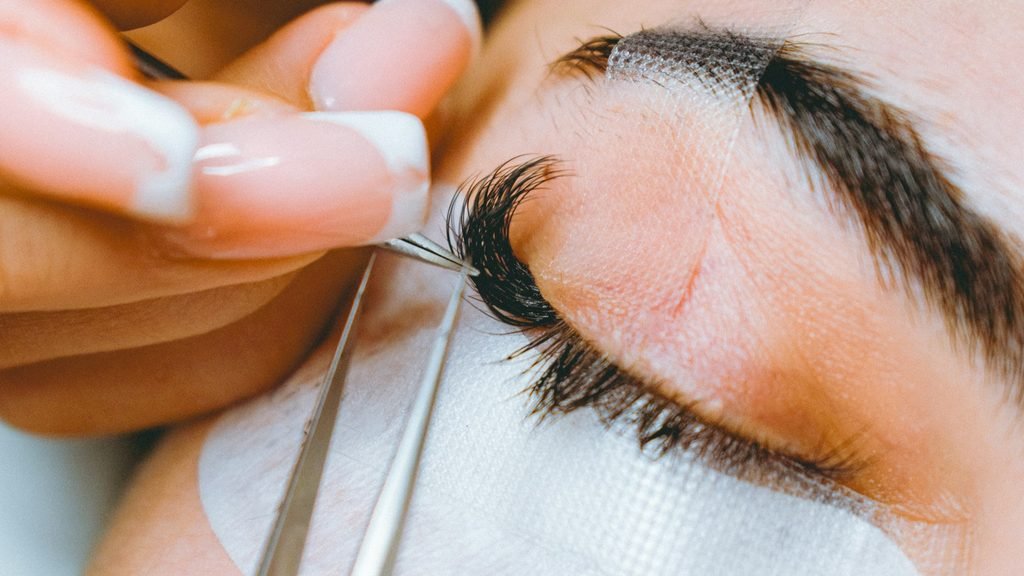
Hybrid lashes mix single classic extensions with small volume fans across your lash line, usually close to a 50/50 split. The result sits between a classic set and a full volume set — fuller and more textured than classic, lighter and more natural-looking than volume. Most lash artists adjust the ratio depending on how sparse or full your natural lashes already are.
If you’ve worn classic lashes and felt like they vanished into your face by midday, or you’ve looked at volume lashes and thought they were more than you wanted, hybrid is usually the set people land on next. It’s not a compromise so much as a different tool for a different lash line.
How Hybrid Lashes Actually Work
A classic extension attaches one lash to one natural lash. Nothing fancier than that — it lengthens and defines, but it doesn’t add much density if your natural lashes are already thin or spaced out. A volume extension is different: the artist fans out several very thin extensions and attaches that whole fan to a single natural lash. That’s where volume sets get their fullness, since one natural lash is now carrying several extensions instead of one.
Hybrid lashes alternate between these two techniques along your lash line. Some natural lashes get a single classic extension. Others get a small fan. A good lash artist doesn’t place these randomly — fans go where your natural lash line needs more coverage, and classic extensions go where the coverage is already decent. That’s what gives a hybrid set its texture. Parts of the lash line read as fine and separated, other parts read as fuller, and the mix looks less flat than a straight classic or straight volume application.
The ratio isn’t fixed. Some artists start at 50/50 and adjust from there based on how your natural lashes look once you’re in the chair. If your lash line is already fairly full, you might end up closer to 70/30 in favor of classic. If it’s sparse, the artist might lean the other way.
Hybrid vs. Classic vs. Volume
Classic lashes give you length and a clean, separated look. They’re a good option if your natural lashes are already reasonably full and you just want them longer and darker. What classic doesn’t do well is disguise gaps — if your natural lash line has thin patches, a classic set will still show them, just with slightly longer lashes attached.
Volume lashes solve the density problem directly. Because each natural lash carries a fan instead of a single extension, volume sets look noticeably fuller and can read as dramatic, especially at higher fan counts. That drama is exactly what some people want and exactly what other people are trying to avoid.
Hybrid lashes split the difference. You get some of the fullness volume lashes provide without every single natural lash carrying a fan, which keeps the overall look — and the overall weight on your natural lashes — somewhere in the middle. If you’re also comparing extensions to a lash lift, it helps to know upfront that a lift works with your own lashes rather than adding length to them, which is a different decision entirely and one we cover in our lash lift vs. tint comparison.
Who Hybrid Lashes Actually Suit
Hybrid tends to work well if:
- Your natural lashes are moderately sparse or uneven, and you want the gaps filled without going full volume
- You’ve tried classic extensions before and found them too subtle for what you wanted
- You want a set that photographs well but doesn’t look obviously done up in person
- You’re sensitive to lash weight and can’t comfortably wear a full volume set, since hybrid uses fewer total fans overall
Hybrid isn’t necessarily the right call for everyone asking about it. If your natural lashes are already full and evenly spaced, classic extensions alone might give you everything you want, and paying for volume work on top of that would be paying for fullness you don’t need. On the other end, if your natural lashes are very sparse or fine, a lash artist may push the ratio further toward volume than a standard hybrid split, which starts to blur into a volume set with a few classic accents rather than a true hybrid.
The honest answer is that “hybrid” isn’t one fixed look. It’s a range, and where you land on that range depends on your natural lashes and what your artist decides during the consultation.
Does Your Eye Shape Change the Answer?
It does, a little. Volume-heavy sections tend to lift and open the eye more, so lash artists often place a few extra fans near the outer corner for hooded or downturned eyes to create that lifted effect. Round eyes usually look more balanced with even length across the lash line rather than a dramatic outer flare. Almond eyes have the most flexibility and can carry almost any hybrid ratio without it looking off.
None of this means you need to diagnose your own eye shape before booking. A lash artist maps the set to your face during the consultation, and mentioning what you liked or didn’t like about a previous set gives them more to work with than an eye-shape label would.
How Hybrid Compares on Comfort and Weight
Weight is a fair concern, since it’s your natural lashes carrying the extensions, not just your eyelid. A classic set is the lightest option because each natural lash carries exactly one extension. A full volume set is the heaviest in theory, but the fans are usually made from very fine, lightweight material, so a well-applied volume set still shouldn’t feel heavy. Hybrid sits in between by weight, simply because fewer of your natural lashes are carrying a fan compared to a full volume set.
If your natural lashes are already weak or brittle, weight matters more than usual, and that’s a conversation worth having with your lash artist before the appointment rather than after you notice discomfort.
What to Expect at Your Appointment
A hybrid full set generally takes longer than a classic set, often close to two hours, because the artist is switching between two placement techniques throughout the appointment instead of repeating one motion. You’ll be lying down with your eyes closed for most of the session while the artist maps your lash line, deciding where the fans go and where the single extensions go based on your natural pattern and the density you asked for.
Fills are typically needed every two to three weeks, and a full set generally holds its shape for four to six weeks total before it needs a fresh application rather than just a fill. This isn’t really about the extensions failing — it’s that your natural lashes shed and regrow on their own cycle regardless of what’s attached to them, and once a natural lash sheds, whatever extension was on it goes with it. Wait too long between fills and the gaps left by shed lashes start to show, especially in a hybrid set where the texture already varies across the lash line.
Aftercare that Actually Matters
Most early lash extension failures come down to a short list of predictable habits: oil-based products near the eyes, sleeping face-down without any protection, and rubbing the eyes out of habit. Oil is the biggest one — it breaks down lash adhesive faster than almost anything else, so oil-based cleansers, makeup removers, and even some heavy moisturizers used too close to the lash line will shorten how long your set lasts.
Brushing your lashes daily with a clean spoolie matters more with hybrid sets than with classic ones, since the mix of single extensions and fans has more surface texture and is more prone to tangling overnight. A quick brush-through in the morning keeps the classic and volume sections separated instead of matting together.
If you’re weighing extensions against other lash options more broadly, our guide to eyelash and hair extensions lays out the wider comparison. And if part of you is wondering whether you even need extensions at all, lifting your natural lashes is worth a read before you book anything — it’s a lower-commitment option that works with what you already have.
Hybrid vs. Wispy
These two terms get mixed up constantly, and it’s worth untangling them before your appointment. Wispy sets are about length variation — certain extensions are noticeably longer than their neighbors, creating small spikes along the lash line. Hybrid is about application method — mixing classic placement with volume placement. The two aren’t mutually exclusive. You can get a wispy hybrid set, where the artist varies both the lengths and the classic/volume ratio in the same sitting.
Salons don’t always use these terms the same way, so if you have a specific look in mind, bring a reference photo to your consultation rather than relying on the label alone. What one salon calls “hybrid” might be closer to what another calls “wispy volume,” and the fastest way to avoid a mismatch is to show, not just tell.
None of this means you need to walk in with the perfect vocabulary. A decent lash artist will ask what you don’t like about your current lashes, or what you’re hoping to change, and translate that into a placement plan without you needing to know the difference between a 2D fan and a 4D fan going in. The terms are useful for research and for setting expectations before you sit down, but the consultation is where the actual decision gets made.
Frequently Asked Questions
Can I switch from classic to hybrid later? Yes. Plenty of people start with a classic set, get comfortable with extensions, then ask for more density at their next appointment. There’s no rule that says you have to commit to one style forever.
Do hybrid lashes damage your natural lashes? Not when they’re applied correctly by a trained artist and each extension is sized appropriately for the natural lash carrying it. Damage usually comes from extensions that are too heavy for the natural lash, poor removal, or picking at lashes that haven’t shed on their own yet.
Are hybrid lashes a good first set? For most people, yes. Classic is the gentlest starting point if you want to test how you feel about extensions at all, but hybrid is a reasonable first set if you already know you want more than a classic look.
What if I don’t like my hybrid set? Extensions aren’t permanent. A lash artist can rebalance the ratio at your next fill, shifting more toward classic or more toward volume depending on what didn’t work for you the first time.