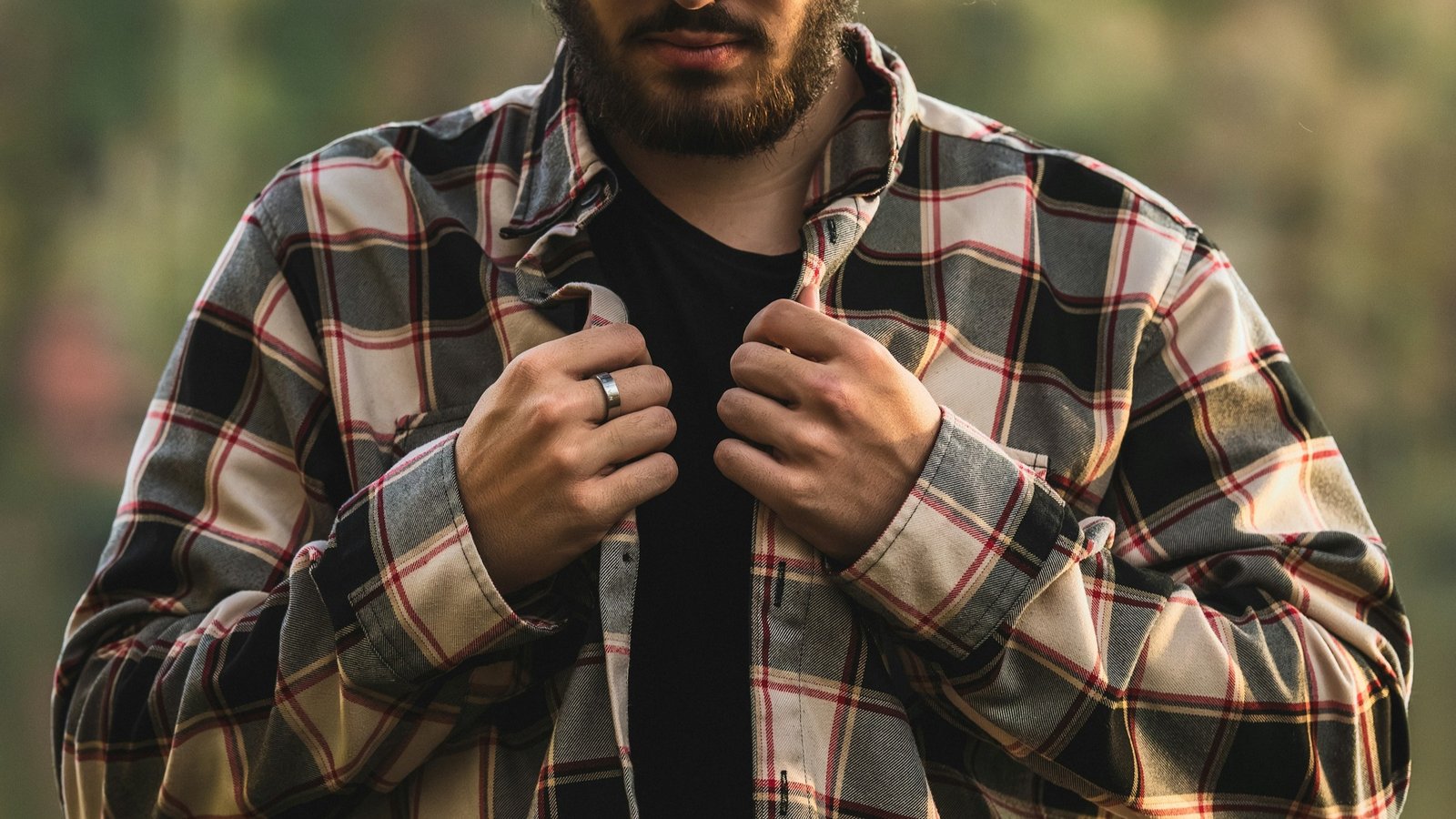
Wear a plaid shirt tucked when you want to look put together, open over a plain tee when you want it relaxed, tied around your waist when it’s too warm to keep on, and layered under a sweater or jacket when it’s cold. Keep everything else in solid, quiet colors.
Plaid shirt clothing looks easy on a hanger and harder in a mirror. The pattern is loud, the fabric can be bulky, and a shirt that’s slightly off in size makes the whole outfit look sloppy. A few rules cover almost every situation, so here they are.
Know what you’re buying
People use “flannel” and “plaid” as if they mean the same thing. They don’t. Plaid is a pattern, and in North America the word is commonly used for what is more formally called tartan, as the tartan entry on Wikipedia explains. Flannel is a fabric. Wikipedia’s flannel entry makes the same split, noting that plenty of flannel shirts have no pattern and plenty of plaid shirts aren’t flannel.
It’s important since the material determines how the shirt will perform. The heavyweight, brushed flannel will be warm and rigid. It can be worn both open and layered, but tends to bulk when tucked. The lightweight cotton plaid performs better, is easy to tuck, and can be worn under a sweater. Check the tag before you decide how you’ll wear it.
Pick the pattern first
Proper scale and proper contrast outweigh proper colors. Large, high-contrast checks, such as red and black buffalo plaid, are tough and casual in nature. They should be worn unbuttoned with a T-shirt, jeans, and boots. They cannot be dressed up. Smaller and tighter checks, with low contrast, in navy blue, gray, or forest green resemble a solid when viewed from a distance so, they can easily be tucked and worn to office.
Once you have a shirt, pull one color out of it and repeat it somewhere else, in a belt or a pair of boots. One echo is enough. Keep other patterns away. Stripes or a second check will fight the plaid, and unless the scale is very different the result looks accidental.
Tucked
The Tuck is the formal name, and it is most suitable for a lightweight to medium weight cotton plaid in a small pattern. It can be worn with either dark blue jeans or dark chinos, use a belt, and fully tuck in the shirt so that the front of the shirt lies flat. The bottom hem must fall down past your belt line, as this will keep your shirt tucked while sitting or reaching. Leave the top button open if you’re not wearing a tie.
Brown leather boots or clean leather shoes finish the look. For the office, shoes do a lot of the work, and our guide to business casual shoes covers comfortable options. When the weather cools, corduroy pants in tan or olive sit well under a muted plaid.
If the shirt is a heavy flannel, skip the tuck. It bunches at the waistband and adds bulk right where you don’t want it.
Open
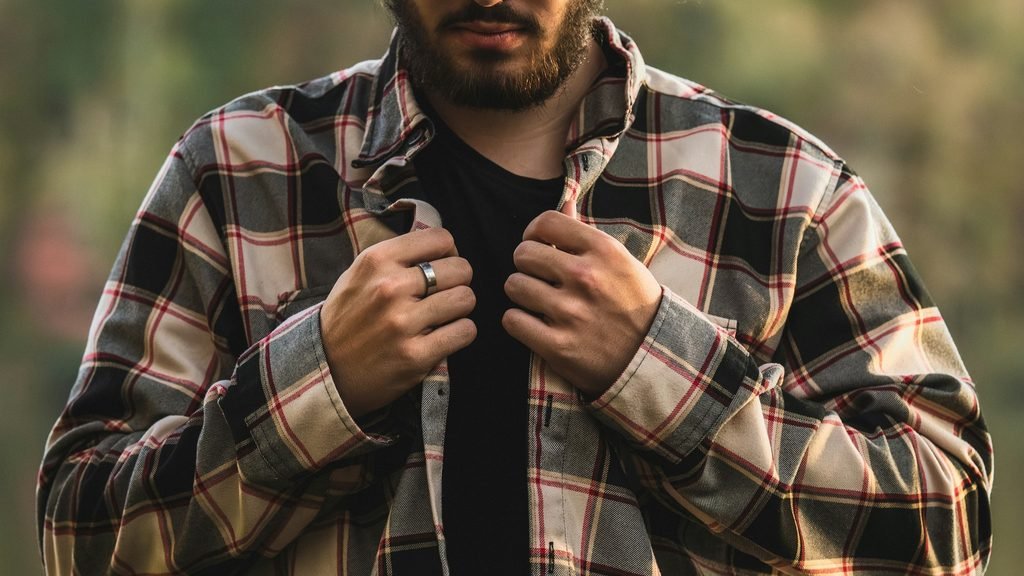
It is also the easiest way to wear plaid shirts which explains why it can be seen everywhere. Wear a simple plain t-shirt in either white, gray, black or navy color and leave the shirt unbuttoned and it will be worn like a jacket.
There are two aspects of styling which will make you look cool with this style. First, select a plain tee that is shorter than the plaid shirt to ensure that the layers start from the tee and move up to the plaid shirt. This way the hem of the shirt should fall between your waist and mid-thigh. Anything else will look like wearing a coat. The second thing that needs attention is the sleeves. They can be rolled till the mid forearm or buttoned at the wrist if they fall appropriately.
Bold plaids suit this method best, since the plain tee gives the pattern room. A dark tee under a bright plaid looks sharp. A white tee gives a cleaner, more casual result.
Tied
Tying a plaid shirt around your waist is a look people link to the 90s, and it still works as long as the rest of the outfit is already casual. It earns its place when the morning is cool and the afternoon isn’t, because you can wear the shirt for the cold part and carry it, hands free, for the rest.
Tie it at the waist rather than on the hips, and knot the sleeves tight so the shirt doesn’t drag or slide down. Thin cotton shirts tie flat. Heavy flannel makes a lump at the back and tends to slip. A plain tee, jeans or shorts, and sneakers is the combination that works best.
Skip it with tailored trousers or anywhere people dress up. It reads as a shirt you forgot to put on.
Layered
Layering is the cold-weather method, and it’s where a plaid shirt earns its keep. Under a sweater, pick a thin cotton plaid and wear a crewneck or V-neck in solid navy or gray, so the collar and cuffs show and the body stays smooth. Pull the collar out over the sweater’s neckline instead of tucking it under.
Under a jacket, the shirt becomes a middle layer, and this is where heavy flannel works well. A quilted jacket over a flannel shirt makes sense for fall and winter, and you can leave the jacket open so the plaid shows at the collar and cuffs. Keep the jacket a solid color so there’s only one pattern in the outfit.
Fit checks for every method
Fit decides whether a plaid shirt looks good, and a few checks settle it. The shoulder seam should sit at the edge of your shoulder. The sleeves should end around the wrist bone. You should be able to pinch a couple of inches of fabric at your stomach, but not a fistful.
Look at the pattern too. On a well-made shirt, the lines match across the front placket and the chest pocket. When they don’t, the shirt looks cheaply cut even if the fit is right, and cheaper shirts skip this step often. If a cotton shirt runs a bit roomy, you can shrink a shirt a little in the wash, though only try it on one you can afford to ruin.
If you only buy one, make it a mid-weight cotton plaid in a medium-sized check, in navy or green. It tucks cleanly and layers under a sweater without bunching. A heavy flannel can come later, once the weather asks for it.