Good wooden wall art fits its wall. Choose a style that suits the room, size it to about two-thirds of the width of the furniture beneath it, and hang the center around 57 inches from the floor. That handles the usual mistakes, like a piece that looks lost on a big wall or sits too high to enjoy.
Wood gives a wall grain and some depth that a flat print can’t. It also weighs more than most art and reacts to sunlight and damp, so a few decisions are worth making before you buy. Here is how I’d work through them.
The main styles of wooden wall art
Wooden wall art covers more ground than most people expect. Knowing the main types makes shopping quicker.
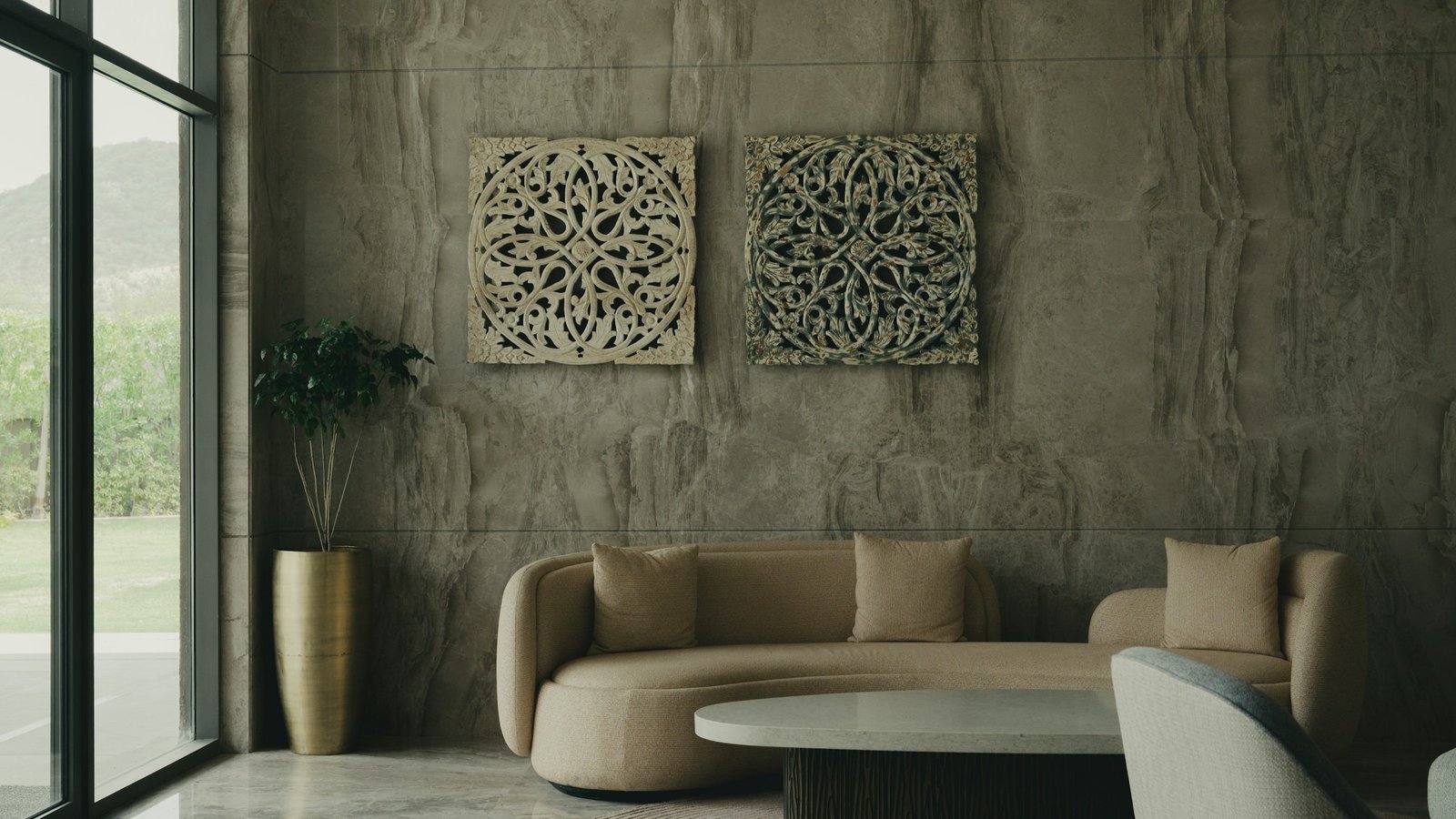
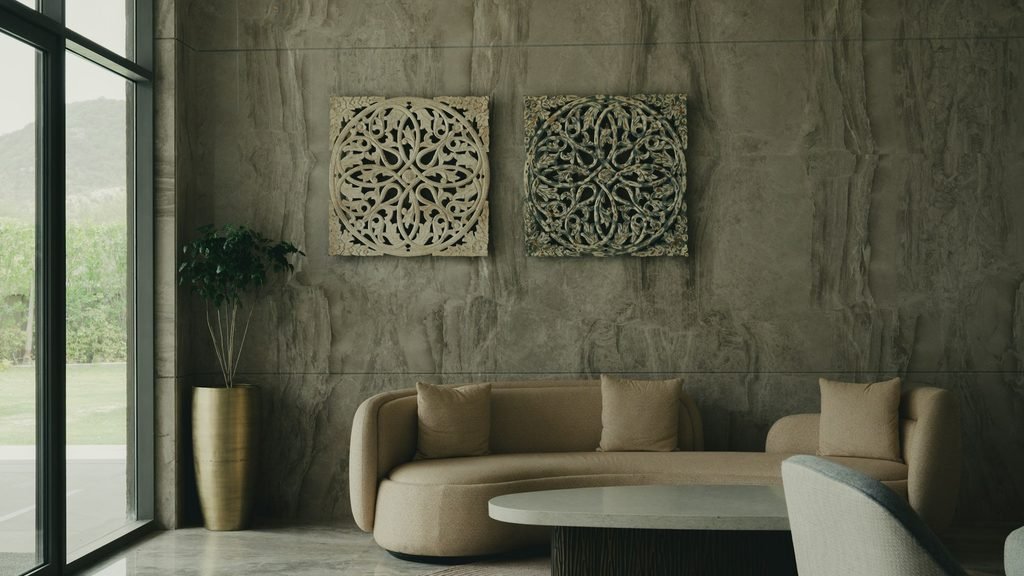
Carved panels and medallions look hand-worked, with patterns cut into the surface. They suit traditional and boho rooms, and they usually work best as a single centered piece.
Geometric panels are shaped pieces of wood, often in two or three tones, hung together as a set. They look modern and tend to sit well over a bed or sofa. Many are sold as sets of three, which takes some of the guesswork out of spacing.
Layered or 3D pieces stack thin sheets of wood so the art casts small shadows. Mountains and trees are common subjects, and the shadows shift as the light changes during the day.
Reclaimed and plank pieces keep their knots and nail holes on show. They fit farmhouse and rustic rooms, and a long horizontal one looks good over a headboard.
Sculptural pieces and wood slices sit closer to objects than decoration. In a minimalist room, a single shape can carry a whole wall.
Printed or burned designs are the most personal option. You can put a map or a family photo on wood, and a wooden world map is a popular choice for an office or hallway.
Match the wood to your room
Start with the wood tone. Light woods like birch and maple tend to suit Scandinavian and modern rooms, while walnut and other dark woods look at home in mid-century and traditional spaces. If you can’t name your room’s style yet, our guide to interior design styles explains how they differ, and choosing gets easier once you can.
Consider the color of the walls as well. A dark artwork placed on a dark wall might get lost, while a light one on a white wall will fade away. Just a bit of contrast will allow the texture to be seen.
Matching the wood in your furniture takes some care. Similar tones may appear to be a close miss, but if not matched accurately, they need to differ significantly.
Pick a size that fits the wall
Too small is the most common mistake. A guideline designers often use is to make art about two-thirds the width of the furniture under it. For a 90-inch sofa, that means a piece or group about 60 inches wide.
Suppose you can’t find a single piece that wide, a set of two or three panels works. Hang them with about 2 to 3 inches between each and treat the group as one piece when you measure.
Small walls need the opposite approach. One medium piece usually looks calmer than a cluster of small ones. In a narrow hallway, a tall vertical panel or a shallow horizontal strip keeps the wall from feeling crowded.
Where wooden wall art works best
Above the sofa is the classic spot. Settle the seating first and choose the art afterward, because the layout decides how much wall you really have to fill. Our living room design guide works in that same order.
Over a bed, a wide horizontal piece or a set of panels works well. If your bed frame is wood, decide early whether to match it or contrast with it. The wood bed frame guide covers common woods and finishes, which helps when you’re comparing tones.
Above a fireplace, center the piece on the mantel. One slightly narrower than the mantel usually looks balanced, and our tips on styling fireplace mantels cover what to put underneath it.
For a hallway or entrance, pick something shallow. People walk close to these walls, and a sculpture that sticks out is hit. Kitchens and baths need attention. Steam and grease are hard on wood, so make sure to select a sealed piece and keep it away from the stove and the shower.
How to hang it so it looks right
Install the center of the artwork at a height of 57 inches from the floor. This will place it just about at eye level and at the standard height used by galleries. Take your measurement from the center, not the top or the hook. Over furniture pieces, allow a gap of 6-8 inches between the piece of furniture and the artwork.
Wood is heavy, so check the weight in the listing and buy hardware rated for more than that. Screw into a stud where you can. Where there is no stud available in drywall, make sure the anchors you use are appropriate for this load. Most large pieces will require two hooks, ensuring they are even, too.
Before you start drilling holes in the wall, cut out paper of the same size as the piece of artwork and tape it to the wall using painter’s tape. This will help you decide whether you are still happy with this position after a couple of days.
What to check before you buy
“Wood wall art” is used for solid wood, plywood, and MDF, and they have different features. The solid wood is heavy and might move due to changes in moisture content. The MDF is cheap but not moisture-resistant. The listing must tell you which one you are purchasing, and if it does not, ask.
It is good to check the final weight and what hanging materials are supplied. There are chances that the product you are buying has only one flimsy hook.
It is easy to take care of. Just dust it using a dry, soft cloth. The other important thing is keeping the item away from direct sunlight, as it might discolor. Also, do not hang it in a moist area.
In case there are two pieces that you find difficult to choose from, cut two pieces of paper in the shape of both items, put them on the wall and let them stay for a few hours. The wall usually picks one for you.