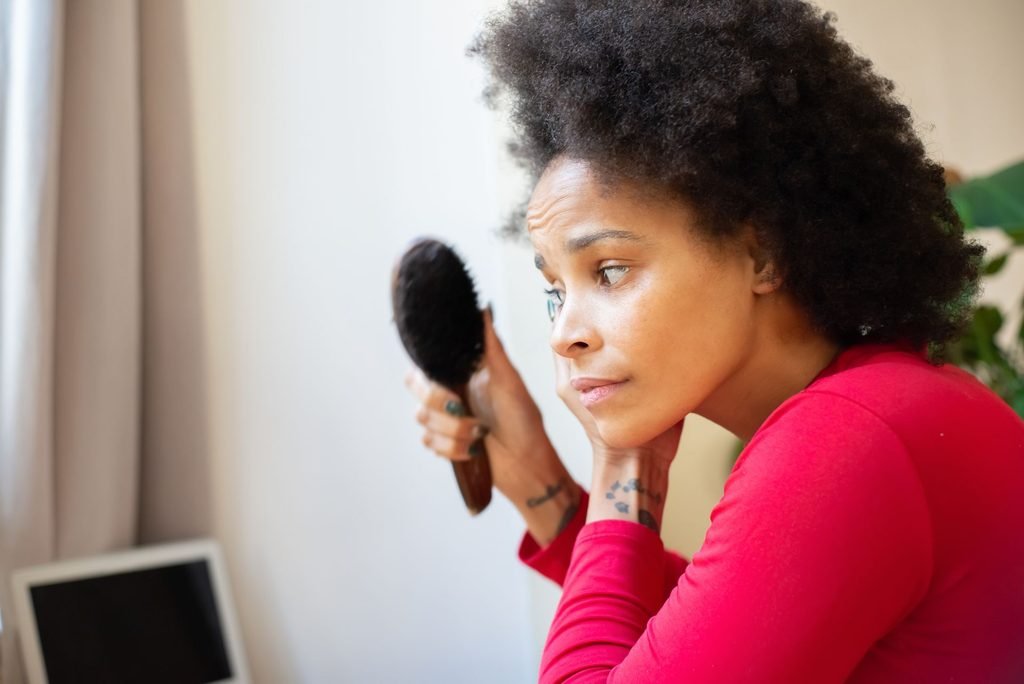
A curl brush works best on soaking wet hair coated in product, pulled through in one direction from root to tip. Used dry, or dragged back and forth, it separates your curl clumps and turns definition into frizz. The brush isn’t the problem — how and when you use it usually is.
If you’ve bought a curl defining brush hoping for the bouncy, clumped curls you keep seeing online and ended up with something closer to a halo of frizz, you’re not doing it wrong out of carelessness. Most tutorials skip the part where they explain why the tool behaves so differently depending on when you pick it up.
What a curl brush is actually built for
A curl brush isn’t a detangling brush that happens to be curved. Its job is to gather loose strands into a single, defined clump while the hair is still wet and slippery with product. The bristles — usually flexible nylon or a boar-nylon mix — are spaced to pull hair together rather than separate every strand, which is exactly what a paddle brush or wide-tooth comb does instead.
That distinction matters because it changes when the brush should touch your head at all. On dry, product-free hair, there’s nothing for the bristles to clump. They just rough up the strands that are already there, lifting the outer layer of each hair fiber and breaking apart whatever curl pattern had formed.
The mistake that causes most of the frizz
Brushing dry curls, or brushing wet curls that don’t have enough product in them, is the single biggest reason people give up on these brushes. Without slip, the bristles create friction against the hair shaft instead of gliding through it. Repeated friction lifts the hair’s outer cuticle layer, and once that layer is roughed up, hair loses its ability to hold moisture and starts looking dull and frizzy no matter what you style it with afterward. That’s not unique to curl brushes — any brushing or combing creates the same kind of mechanical wear on hair, and curly hair is more exposed to it because the twists in the strand already leave the cuticle slightly lifted.
The fix is simple even if it feels counterintuitive: don’t touch the brush to your hair until it’s dripping and coated in a leave-in or curl cream. If your hand doesn’t come away slippery when you run it through a section, add more product before you brush.
A second common mistake is brushing back and forth like you would with straight hair. Curl brushes are meant to move in one direction only, from root to tip, in the same section each pass. Going back over the same spot in both directions breaks apart the clump you just built and re-tangles the ends.
How to actually use it
Start on hair that’s freshly washed or fully re-wetted, with your styling cream or gel already worked through in sections. Divide your hair into four to six parts depending on thickness — trying to brush your whole head at once is what usually leads to shortcuts. Brush each section from root to tip in one pass, then move to the next. If a section still looks stringy after one pass, add a bit more product and go over it once more rather than brushing it repeatedly dry.
Some people also use the brush at the root, held flat against the scalp, to add lift before letting the rest of the strand air-dry or diffuse. If you’re combining this with a diffuser or a heatless method, doing the sectioning and brushing step before you touch a hairdryer keeps the clumps from separating while your hair is still fragile and wet — the same principle covered in our guide to heatless curl techniques.
Matching the brush to your curl pattern
Not every curl brush works for every texture. Looser waves and 2A-2C patterns usually do better with a softer, more flexible bristle, since anything stiff can pull the wave out entirely before it sets. Tighter curls and coils can handle — and often need — a firmer brush with more spacing between bristles, so it can grip and shape a fuller clump without snagging halfway through.
If you’re not sure where your hair falls or you’ve been guessing at your routine based on what works for someone else’s texture, it’s worth reading up on caring for curly hair by texture before you invest in more tools. The right brush for a friend’s curl type can genuinely wreck yours.
Where this fits into wash day
Curl brushes work on wash day, not as a daily restyle tool. Re-wetting dry curls just to brush them adds unnecessary friction on hair that’s already been through a full wash-and-style cycle. If your curls are dropping between washes, that’s more often a product or overnight-care problem than a brushing one — worth checking against how often you should actually be washing your hair if you’re brushing more than once or twice a week to compensate.
Product choice matters here too. A brush can only clump what’s already coated and slippery, so what you put on before brushing decides how much the tool can actually do. If you’re stuck choosing between a leave-in and a curl cream for this step, this comparison walks through which one gives more slip for brushing versus which one holds the clump once it’s dry.
Used the way it’s built to be used — wet, coated, one direction, section by section — a curl brush does exactly what it promises. Used dry or rushed, it undoes the work before you’ve even reached for a diffuser.