There are so many types of ear piercings that you can consider. In fact, you might feel overwhelmed by the possibilities.
Are you going for something conventional like lobe piercings? Maybe you prefer helix piercings? Or perhaps the discrete daith piercings are more your thing? No matter what you decide on, your decision will definitely be telling about you.
Here, we will take a look at every major ear piercing type and find out all there is to know about their placement, the pain involved and healing time.
Let’s get started.
What Are the Different Types of Ear Piercings?
There are two types of ear piercings: lobe piercing and cartilage piercing.
Lobe piercing is when your ears get pierced in the fleshy lower part of your earlobe. This type is less difficult to heal and is not very painful. Cartilage piercing is done in the tough and harder part of your ear. It takes time to heal and is more painful.
Here are all the different types under both of these categories.
Lobe Piercings
1. Standard Lobe Piercing
This is the most common type of ear piercing worldwide. It sits in the middle of the earlobe, which is the soft and lower portion of the ear.
Pain level: 2 out of 10 – barely felt
Time for healing: 6 to 8 weeks
Best jewelry: Studs, hoops, drop earrings
The classic lobe piercing is ideal for first-timers. It is easy to heal, fits all types of jewelry, and complements all aesthetics. If you are just starting out, this is the right one for you.
2. Upper Lobe Piercing
The upper lobe piercings are a little above the usual lobe piercing position. The piercing is done at the soft area of the ear, but a bit higher.
Pain scale: 2/10
Recovery period: 6-10 weeks
Recommended jewelry: Studs, small hoops
Stacking of this piercing works out well. Many people like to stack it with a regular lobe piercing.
3. Transverse Lobe Piercing
This one is unique. In contrast to other lobes where the piercing is done in a vertical manner from top to bottom, in the transverse lobe piercing the hole will be made horizontally through the lobe.
Pain scale: 4/10
Recovery period: 6 to 12 months
Best Jewelry: Curved barbells, straight barbells
This one is very edgy and unique since the ends of the barbell can be seen on both sides of the lobe.
4. Stretched Lobe (Gauges)
Stretching starts with the usual lobe piercing and increases its size by putting in increasingly large pieces of jewelry.
Pain level: Varies — continuous process
Time to heal: Continuous
Recommended jewelry: Tunnels, plugs, tapers
Stretching requires dedication because you have to enlarge it gradually to prevent tearing. Some people will stretch to smaller sizes for a modest effect, while some will stretch to huge sizes.
Cartilage Piercings
5. Helix Piercing
Helix is a very common piercing done on cartilage. It lies on the upper outer ridge of your ear.
Pain Level: 4 out of 10
Time to heal: 6 to 12 months
Best jewelry: Studs, Hoops, Flat back rings
Helix piercing is extremely flexible. You can have either a single helix, double helix, or even a triple helix on the same outer ridge of your ear. Check out our full guide on helix piercing styles and jewelry tips to explore the possibilities.
6. Forward Helix Piercing
The forward helix is located at the very forefront of the upper ear — where the helix bends towards your face.
Pain scale: 5/10
Healing period: 6 to 9 months
Ideal jewelry: Flat back studs, small hoops
It’s a subtle yet powerful position. It provides an elegant framing for the face and goes perfectly with tiny body jewelry pieces. There is even an option to get a double or triple forward helix piercing.
7. Rook Piercing
The rook passes through the anti-helix, which is the inner cartilage ridge located above the ear canal.
Level of pain: 6/10
Duration of healing: 6-12 months
Good choices of jewelry: Barbells and clicker rings
This piercing is one of the most recognizable ear piercings in existence. This is a piercing found in a very distinct location and it may not be possible for everyone to get it because of their anatomy. But when it works, it looks incredible. Read our in-depth rook piercing guide to learn more about the process and what to expect.
8. Daith Piercing
The daith piercing passes through the most internal flap of cartilage, which is located right above the opening of the ear canal.
Pain level: 5 out of 10
Duration of healing: 6-12 months
Best jewelry choices: Seamless rings, clicker hoops, heart-shaped rings
This type of piercing has gained tremendous popularity over the last several years. It is often believed that it alleviates migraines although there is no scientific evidence proving this. Whether for aesthetics or wellness, it’s a stunning, intimate piercing.
9. Tragus Piercing
The tragus is the small, firm protrusion of cartilage located right at the front of the ear canal opening.
Pain level: 4/10
Healing time: 6-12 months
Best jewelry: Flatback studs, tiny hoops, circle barbells
As difficult as it seems, the tragus piercing is one of the easier cartilage piercings. This is due to the fact that there aren’t many nerve endings in that area. So most people are surprised by how tolerable it is.
10. Anti-Tragus Piercing
Anti-tragus is situated directly opposite to the tragus – on the inside cartilaginous ridge slightly higher than the earlobe.
Pain level: 6/10
Recovery period: 8 to 16 months
Jewelry types: Curved barbells, small hoops, flat back studs
This is more of an unusual choice. It is not possible for everyone to have such a piercing due to anatomical factors. So consult a professional piercer before committing.
11. Conch Piercing
The conch can be placed either inside the deep open bowl shaped portion of the ear or in the flat cartilage part beneath the helix.
Pain level: 5/10
Healing duration: 6 to 12 months
Best jewelry: Studs, labret, flat-back labret, hoops
The conch is an eye-catcher piercing style. It provides ample space for gorgeous piercings and looks stunning as part of an ear stack. Get all the details in our complete conch piercing guide.
12. Industrial Piercing
Industrial piercing is performed by joining two different holes with one straight barbell piece.
Pain rating: 7/10
Duration of healing: 6 to 12 months
Preferred jewelry: Industrial barbells; some people also use two different barbells.
The industrial piercing is one of the most eye-catching among all other piercings. It leaves a powerful impression on anyone who sees it. Since this piercing includes two holes, healing process may be more complicated because both of them should be healed at the same time.
13. Snug Piercing
The snug piercing runs through the cartilage fold in the ear called the anti-helix, parallel to the external outline of the ear.
Pain level: 7 out of 10
Healing period: 12 to 18 months
Ideal jewelry: Curved barbells
The snug piercing is among the most painful cartilage piercings due to the density and thickness of the tissue. The location is also anatomy dependent, but it’s definitely worth having for its uniqueness.
14. Orbital Piercing
The orbital piercing involves two punctures with one ring going through. This may either be through the earlobe or cartilage.
Pain level: Depends on where it is placed
Healing period: 6-12 months
Recommended jewelry: Captive bead rings, seamless rings
These piercing forms a circle around a part of your ear. It is an artistic type of piercing which looks great when done together with stacked ears.
Face-Adjacent Ear Piercings
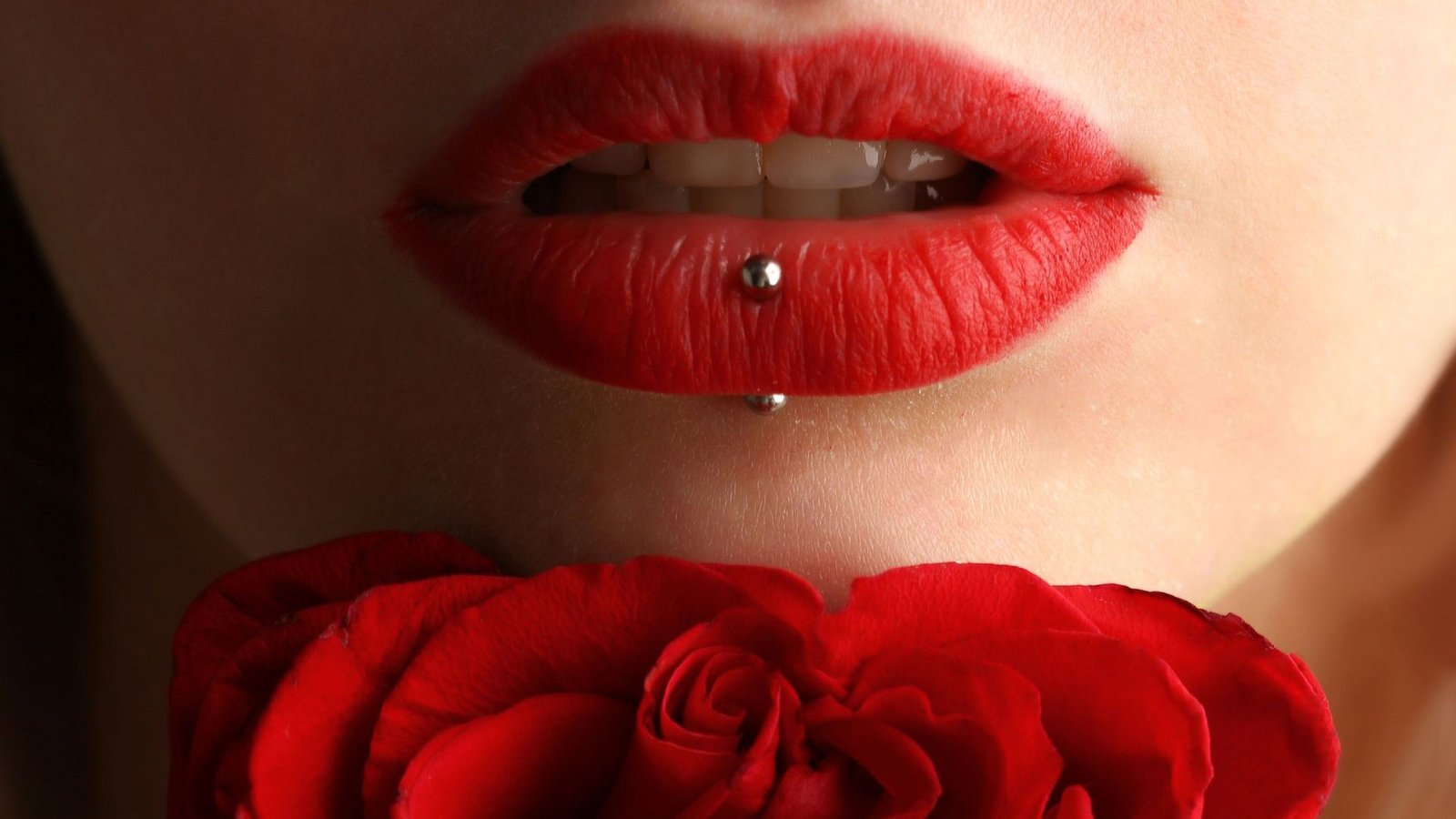
15. Ashley Piercing
It is actually a form of lip piercing but is included here due to its association with earrings in face and ear stacking piercing styles.
Pain level: 6/10
Time taken to heal: 3 to 6 months
Best jewelry: Flat-back labret studs
The Ashley piercing exits through the front center of the lower lip. It creates a bold, symmetrical look. If you’re building a curated face aesthetic alongside your ear stack, learn everything in our Ashley piercing guide.
How to Choose the Right Ear Piercing
Selecting the correct piercing depends on four factors:
1. Your anatomy. Not all ears are made for all types of piercings. Flat cartilage is not ideal for a rook while some people have tiny traguses that will not fit any hoop earrings. It’s always best to have your ear examined first by a professional piercer.
2. Your ability to withstand pain. The lobe piercings are less painful than the industrial, snug, and rook. Be aware of what type of pain you are able to endure.
3. Your lifestyle. Helix and industrial piercings can be difficult for side sleepers while active individuals will need to consider sweating. Take your daily activities into account when selecting the piercing.
4. Your style. Are you a minimalist or a maximalist? Gold or silver? Hoop or stud? Let your personal aesthetic guide your choices.
Piercing Aftercare: What You Need to Know
Regardless of the type of ear piercing, aftercare is critical.
According to Mayo Clinic’s piercing guide, you should clean skin piercings twice a day with saline solution and avoid swimming until fully healed. Don’t fiddle with or rotate the jewelry. Do not touch your piercing using unclean hands. Do not take out the jewelry until the healing process is fully completed; just because your ear looks to be healed does not mean that the cartilage underneath is healed.
Healthy piercing indicators include swelling and some redness for the first few days and clear or whitish discharge.
Infected piercing indicators include excessive swelling, yellow or green pus, throbbing pain, and fever. See a doctor if these appear.
Building Your Curated Ear Stack
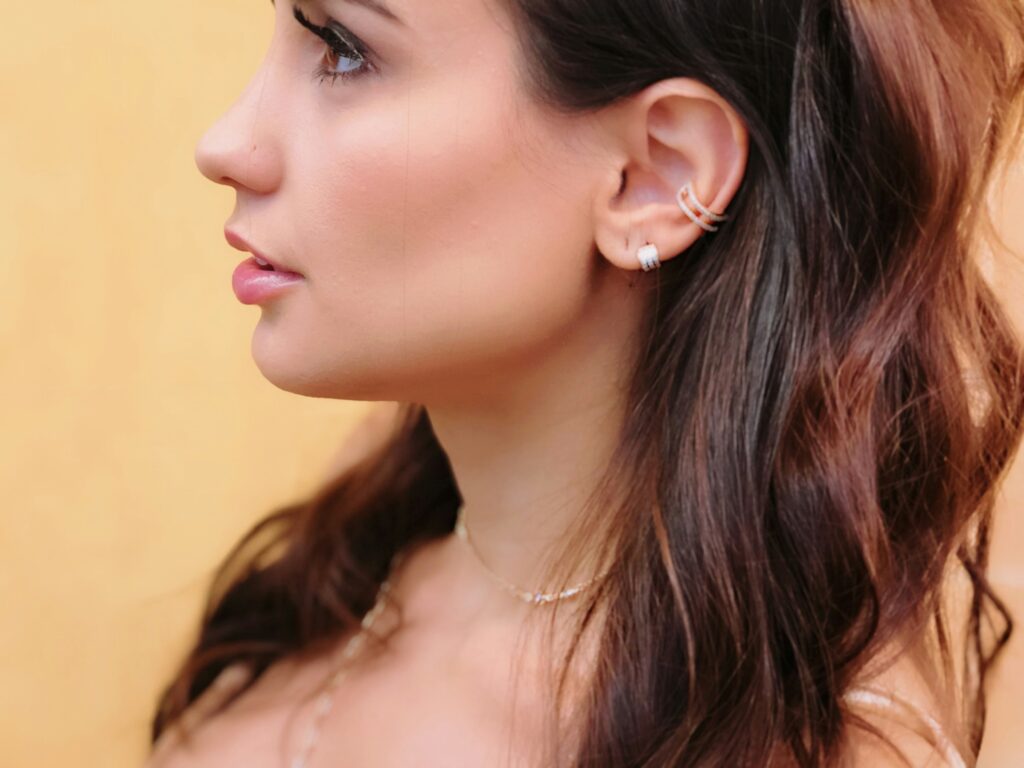
Curated ear look is one of the most popular trends in the world of beauty. It consists in the deliberate selection of an interesting combination of piercings.
For example, a typical curated ear can feature:
- Standard lobe piercing with an upper lobe
- Helix or conch for some cartilage element
- Rook or daith piercing to make the design more sophisticated
Choose different metals wisely. Play with the size of the jewelry you wear. Make your collection of ear accessories more diverse with the help of different shapes: hoops, studs, and barbells. Think of your ear as a canvas.
If you’re also exploring piercings beyond the ear, our dermal piercing guide is a great next read — it covers surface piercings that can complement your ear stack beautifully.
And if you’re drawn to face piercings as part of your overall look, don’t miss our piece on the septum piercing and self-love — it explores the deeper meaning behind one of the most powerful facial piercings.
Final Thoughts
There is just an incredible amount of ear piercings to choose from, which is wonderful news because it means that there’s something for absolutely everybody.
If you’re looking for something simple and delicate such as lobe piercing, something wild and rebellious such as industrial or something unique and discreet such as rook, all of these options are available to you. Be patient, do your homework, and always visit a professional with experience and high-quality implant-grade jewelry.
Your ears are a means of self-expression. Treat them accordingly.
Ready to take the next step? Explore our full piercing content hub on Glamor & Living for guides on specific piercings, jewelry tips, and aftercare advice.