I’ll admit it: I used to think “rattan” and “wicker” were just two fancy words for the same wobbly cafe chair. Then I actually bought one for my own living room, did a little digging, and realized I had no idea what I was buying. Turns out a lot of people are in the same boat.
Rattan chairs are everywhere right now — on sunlit balconies, in coastal-style living rooms, in basically every “boho home tour” video you scroll past. But ask most people what rattan actually is, and you’ll get a shrug. Is it wood? Is it wicker? Will it survive a rowdy family dinner?
Let’s clear all of that up. If you’re also refreshing other corners of your home while you’re at it, our Home & Living section has plenty more to dig into.
So, What Is Rattan Exactly?
And here’s the part I found most surprising. Rattan is neither fabric nor finish, not even a weaving style. In reality, rattan is a plant. And more precisely, a climbing palm which grows in abundance in the tropical forests of Southeast Asia –Malaysia, Indonesia and the Philippines are the main producers.
While bamboo is a hollow stem plant, rattan has an inner core. And it’s this core that gives the rattan stems the ability to be bent without breaking in two. For making furniture, the craftsmen make the stems pliant by heating them and then letting them cool down.
So, when we say “rattan chair,” what we mean is a chair constructed of this particular material. Whether that’s the frame, the woven seat, or both.
Rattan vs. Wicker vs. Cane: The Mix-Up Everyone Makes
Truthfully, even individuals who have used rattan furniture all their lives are still confused about this. It is time to end the confusion.
- Rattan is the natural product. This comes directly from the plant.
- Wicker is not a product, but a way to weave the product. Wicker can be woven from rattan, bamboo, reed, or plastic.
- Cane is the exterior of the rattan plant and is used to weave the seats and backs of chairs.
Therefore, a chair can be composed of rattan, woven in a wicker method and made with a cane seat. The three words can be present in a single chair.
How These Chairs Actually Get Made
There are two ways of making rattan chairs.
Frame-and-weave. Rattan is used to make the frame of the chair. The weaved thinner pieces form the seat and other parts of the chair around the frame.
Peel-and-weave. Cane strips of rattan are tightly woven around the frame made of another type of wood. This approach can be observed when making the so-called vintage style chairs – for instance, my grandmother used such chairs on her porch for years.
Both these techniques result in making a fragile-looking chair which, however, is actually quite strong. This is the main feature of a rattan chair – aesthetically pleasing yet strong enough.
Natural Rattan vs. Synthetic Rattan
And here’s an interesting fact before you make your purchase: not all “rattan chairs” sold on the market are really made of rattan.
Natural rattan grows right on the plant. It’s warm, it has color variations, and its texture is unique. But there’s a problem – it isn’t very good with too much exposure to sun and rain, which means it’s better suited for indoor use or when sheltered outdoors.
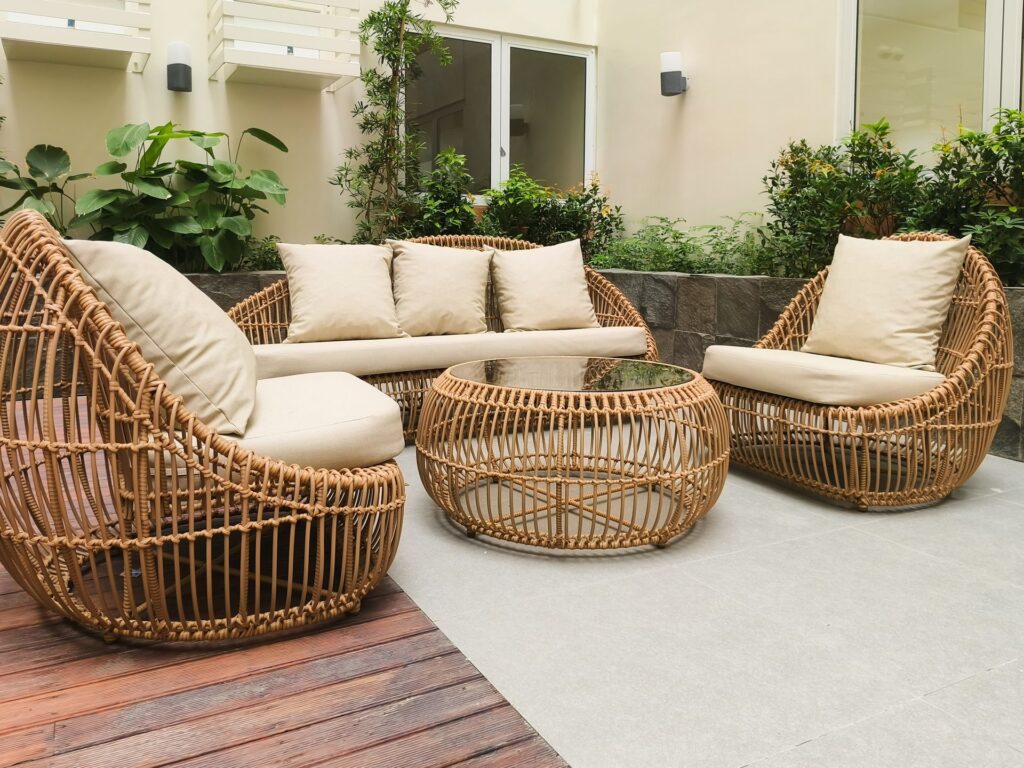
Synthetic rattan can be resin or plastic imitation of the natural variety. This version is more affordable, weather resistant, and can stay outdoors even in winter. It’s the preferable choice when outfitting a patio.
Neither of them is better overall. It all depends on what you’ll use it for.
Popular Rattan Chair Styles
Another factor that has made rattan stand the test of time has been its ability to be styled in so many different ways.
- Peacock chairs – High-backed chairs with a fan design
- Papasan chairs – Deep, curved chairs with a bowl-shaped seat that we all owned when we were in college apartment
- Bistro-style rattan chairs – simply designed chairs used alongside a bistro table
- Rattan accent chairs – armchairs with a weaving design on the backrest and seat
- Outdoor rattan furniture sets – almost always made from synthetic materials
If your room already leans on solid wood pieces, like a wood bed frame, adding a rattan chair gives you contrast instead of competing for attention. The mix of textures is what makes a room feel curated rather than matchy.
Where a Rattan Chair Actually Works in Your Home
Rattan has this quiet ability to soften a room. It adds texture without adding visual bulk, which makes it a great fix for spaces that already feel a little cluttered or heavy.
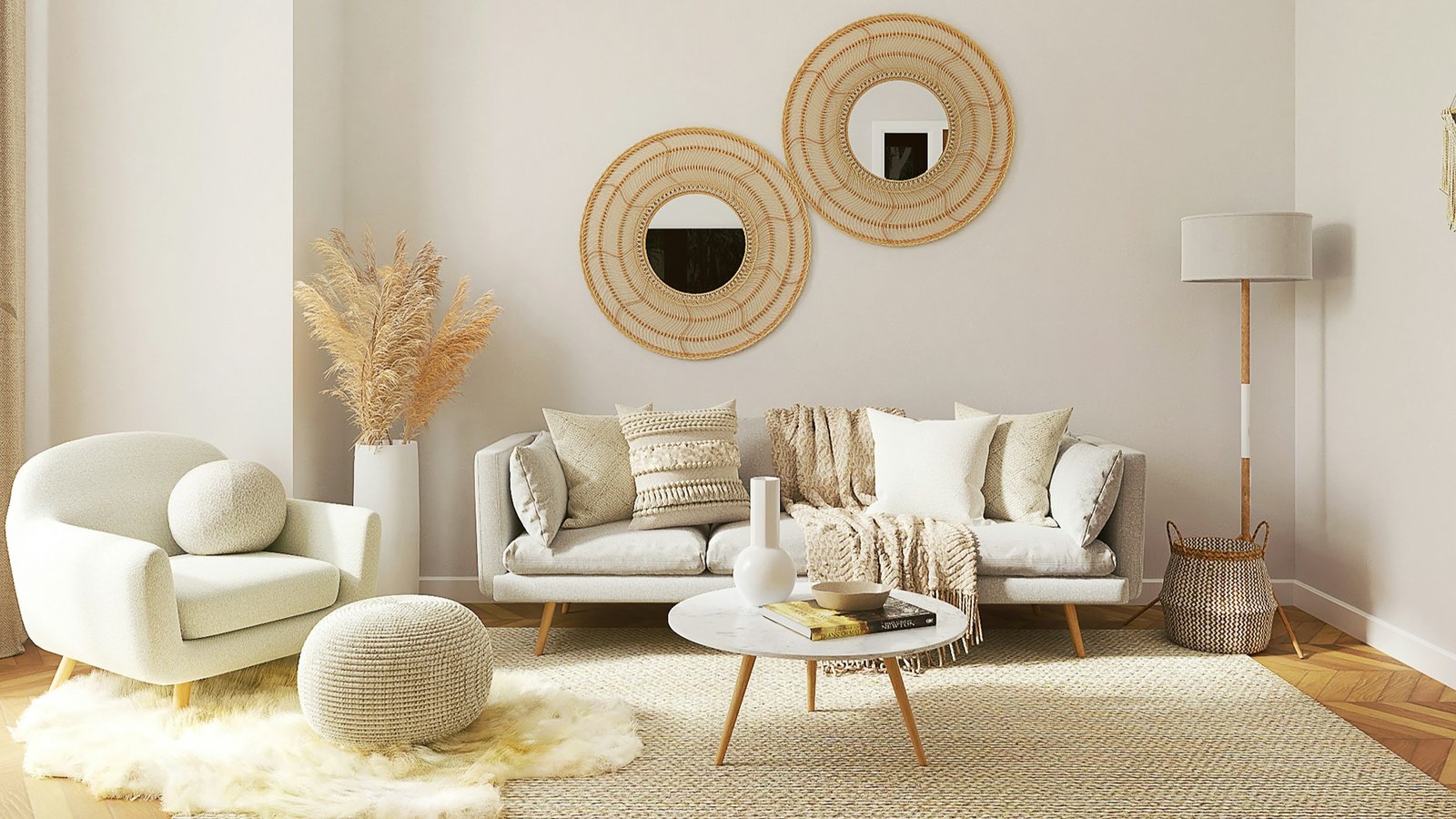
It slots in beautifully next to a French country sofa, where the curves and natural texture feel like they were always meant to be together rather than randomly thrown in. A single rattan accent chair also earns its keep near a styled mantel or tucked into a reading nook, where it becomes the focal point instead of just another place to sit.
The Honest Pros and Cons
What’s genuinely great about rattan:
- It is light, meaning moving things around is not hard work.
- It is durable as long as you maintain it properly.
- Offers warmness and texture that few materials can provide.
- It is affordable at almost all price points.
Things to consider:
- The natural material dries and cracks due to exposure to sunlight.
- Even though it can be used outdoors, it should be synthetic.
- Dust accumulates in the woven surface if cleaning is neglected.
- The material may become fragile quickly if you purchase poor-quality items.
How to Actually Care for It
Good news: caring for a rattan chair isn’t complicated. It just needs a little consistency.
Dust it weekly. A soft brush or a vacuum attachment gets into those woven gaps. This one habit alone is what keeps rattan looking fresh instead of tired.
Keep it out of harsh, constant sun. Too much direct UV dries natural rattan out and makes it brittle. Pulling it a few feet back from a bright window makes a real difference.
Wipe it down, don’t soak it. A barely damp cloth clears grime just fine. Too much water weakens the fibers over time, so go easy.
Give it a little conditioning once or twice a year. A light coat of furniture oil keeps natural rattan flexible instead of letting it dry out and crack.
Bring outdoor pieces in when the weather turns. Natural rattan doesn’t do well in heavy rain or winter cold. Synthetic rattan, on the other hand, can usually stay put year-round.
So, Is a Rattan Chair Worth It?
I’d say yes, especially if you want a piece that adds personality without taking over the room. Rattan works across styles too, from stripped-down minimalist spaces to full-on maximalist ones, as long as you pick the right piece for the right spot. It’s especially at home in bright, open rooms — if you’ve got a vaulted ceiling, a rattan chair fits right into that airy, breathing feel.
Before you buy, run your hand across the weave. It should feel tight and even, never loose or splintery. And be honest with yourself about where it’s going to live — that answer decides whether you go natural or synthetic.
A good rattan chair was never really a trend. It just keeps coming back because it works.