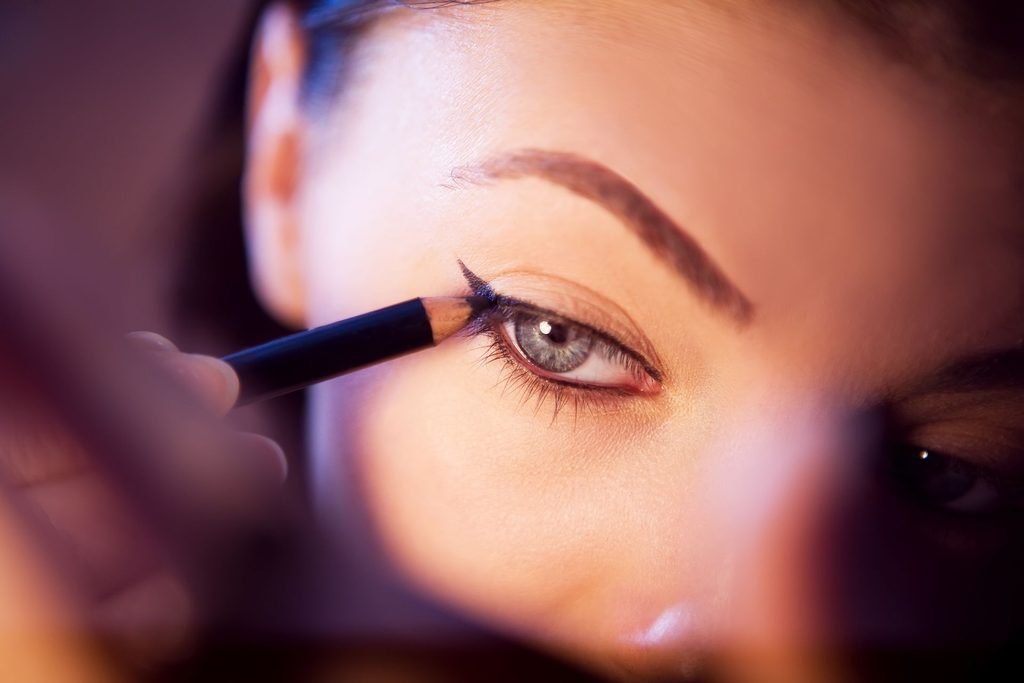
If you’ve ever figured out how to apply eyeliner in the morning only to watch it smudge by noon, the problem probably isn’t your technique — it’s oil breaking the product down before it fully sets. The fix is less about buying a “smudge-proof” formula and more about what you do before and after you draw the line: prime the lid, apply thin layers instead of one thick pass, let each layer dry, and set the whole thing with powder. Get those four steps right and the line you drew at 7 a.m. still looks the same at 5 p.m.
Why It Doesn’t Survive the Morning
It’s almost always oil. Your eyelids produce it constantly, and it eats through pigment, especially the wax-based pigment in pencil liners. Throw in humidity, a few hard blinks, an itchy eye you rubbed without thinking, and no primer underneath, and a perfectly good line ends up in your crease before lunch.
Formula matters here too, though it’s not the whole story. Pencil is the easiest to apply and the first to fail. Gel and liquid last longer, but only once they’ve actually dried, which means you can’t rush straight into mascara or a second coat. Oily lids, hooded eyes, contacts — any of those make the job harder, but none of them make it impossible if you build in a couple extra steps.
Prime the Lid First
This is the step that most people ignore, and this is why their eyeliner never works. First thing first, use micellar water or a gentle cleanser to wipe off your eyelids. The moisturizer you applied, the sunscreen or the natural oils from your skin; all of it provides a slippery base for the eyeliner.
Then once the lids are dry, apply an eyeshadow primer or concealer over them using translucent powder. That gives the liner something to grip and puts a barrier between the pigment and your skin’s natural oil. One note if you’ve had hybrid lash extensions or a lash lift done recently: keep whatever primer you use away from the lash line itself. You’re prepping the lid, not the lashes.
Pick a Formula That Matches Your Eyes
Oily lids do better with gel from a pot or a liquid pen with a felt tip than with pencil — both dry to a matte finish that resists transfer in a way wax-based pencil just doesn’t.
Hooded or mature eyes have the opposite problem. Anything that stays wet too long gets stamped onto the lid the moment you open your eyes, which is its own kind of smudge. Before you commit to a new liner, dot a bit on the back of your hand and time how long it takes to go matte. Twenty seconds and still tacky? Skip it.
Build the Line in Layers
Trying to draw the whole line in one pass is probably the single most common mistake. Thick liquid or gel takes longer to dry, which gives it more time to smear before it sets. Draw a thin base line, wait a few seconds, then go back and thicken it or shape a wing if you want one.
With pencil, warm the tip between your fingers first so it glides instead of dragging, then press a matching eyeshadow over it right away with a small flat brush. This one step can roughly double how long pencil liner holds, since the powder locks the wax down and soaks up the oil that would otherwise dissolve it.
If you’re doing a wing, start at the outer corner with short, connected dashes instead of one continuous stroke. Fixing a slightly crooked dash is a lot easier than wiping off a solid line and starting the whole thing over.
Give It Time to Actually Dry
Thirty to sixty seconds. That’s roughly how long liquid or gel liner needs before it stops being vulnerable. Put your eyeliner on before mascara, not after, so you’re not touching the area while it’s still setting. Doing a smoky eye? Line first, then blend the shadow around it once the liner’s dry.
And try not to close your eyes tight, rub them, or press on the lid right after lining — that’s usually the exact moment a good line ends up smeared into the crease, often before you’ve even left the bathroom.
The Waterline Plays by Different Rules
That thin strip of exposed skin between your lashes and your eye stays wet, constantly, from your own tear ducts. Nothing you put there lasts as long as liner on your lid, no matter what the label promises.
If you want color on the waterline that doesn’t end up under your eye by 2 p.m., use a formula actually meant for it — usually a firmer, more pigmented pencil or a kohl stick. The soft pencils made for your lid will slide right off here. Stay close to the roots of your lashes rather than deep in the waterline; it holds up longer and reads more defined anyway.
Even with the right product, some transfer under the eye is close to universal. If that’s you, give it a minute after applying, check the mirror, and clean up any smudge with a pointed cotton swab before it spreads.
A Few Tools That Actually Help
You don’t need much. A small flat synthetic brush for pressing powder over pencil or gel without smearing the shape. A pointed cotton swab, which is far more precise than a flat one when you’re cleaning up a slip along the lash line. And an eyelash curler used before you line, not after — curl first, or your lashes will catch the wet liner and drag it across your lid.
If clear mascara is already part of your routine, put it on before the eyeliner, not after. It gives your lashes a little hold and separation so a fresh liquid line doesn’t snag on them while it’s still wet. Same idea if you’ve had a lash lift or tint recently — lashes can stay slightly more curled and sensitive for a day or two afterward, so give your liner a bit of extra drying time before you blink normally.
Set It with Powder
Once the line is shaped and fully dry, dust a small amount of translucent setting powder or a matching eyeshadow over it with a fluffy brush. People skip this constantly, and it’s the step that matters most. It soaks up any leftover moisture and leaves a matte finish that oil struggles to break through.
Watery eyes, humid climate, long day ahead — any of those, and it’s worth carrying a travel-size setting spray. Give the eye area a light mist once your makeup is done, and let it air dry instead of patting it, so you’re not disturbing the line underneath.
If It Starts to Fade Anyway
Do not merely layer your eyeliner on top of the smudged one. Instead, use a cotton swab soaked in micellar water to wipe it off; allow the skin to dry, and then redraw another thin line using powder to set it. A new eyeliner applied over an already smeared eyeliner does not come out better and will only take longer to correct.
If you know you will spend ten hours outside, pack a small tub of setting powder along with a flat brush. It will take you only fifteen seconds at midday to redo the eyeliner than to create it all over again.
It’s the Prep, Not the Product
You can spend real money chasing a “smudge-proof” formula and still end up with a mess by noon if you skip the groundwork. Prime the lid. Match the formula to your eye type. Build the line in thin layers. Set it with powder. Do those four things consistently and it stops mattering much which brand’s bottle you’re holding — your eyeliner will just hold up, and you’ll stop thinking about it by mid-morning.