If you’ve been loyal to gel manicures for years, something is about to change your mind.
BIAB nails are showing up everywhere — in salons, on social media, and in every beauty conversation worth having. And yet, most people still don’t fully understand what they are or why they’re different.
That’s exactly what this guide is here to fix.
So, What Exactly Are BIAB Nails?
BIAB stands for Builder In A Bottle. It’s a gel-based nail product that you apply directly onto your natural nail. It works as a strengthening overlay — not an extension.
Think of it as a protective shell that sits on top of your natural nail. It hardens under a UV or LED lamp, just like regular gel. But the formula is thicker and far more flexible.
The result? Nails that look incredible and stay strong underneath.
The product was originally developed by The Gel Bottle Inc., a UK-based brand. It’s now widely available in Australian salons and has quietly become one of the most requested treatments around.
Why Are So Many Women Switching From Gel?
Here’s the honest truth about traditional gel — it looks great for about two weeks. Then it lifts, chips, or starts to feel tight as your natural nail grows out.
Worse, the removal process often causes real damage. Soaking in acetone, scraping, buffing — it wears your nail plate down over time. Many women notice their natural nails become thinner and weaker after years of gel.
BIAB nails solve that problem at the root.
The formula is designed to work with your natural nail, not against it. It flexes as your nail grows. It doesn’t lift the same way gel does. And when it’s time to remove it, a trained technician can do so gently without destroying what’s underneath.
If you’ve been dealing with brittle or peeling nails after gel removal, you’ll feel the difference immediately.
What Nobody Tells You About BIAB Nails
This is where it gets interesting — because there are a few things most articles skip right over.
1. BIAB actually promotes nail growth.
Because your natural nail is protected rather than replaced, it can grow underneath the overlay without breaking. Many women report noticeably longer natural nails after just a few rounds of BIAB. That’s rare with traditional gel.
2. It’s not just for weak nails.
A lot of people assume BIAB is only for those with damaged or fragile nails. Not true. Women with healthy nails use it simply for the longer wear and glossy finish. It’s a lifestyle choice, not just a repair treatment.
3. The finish is different from gel — and many people prefer it.
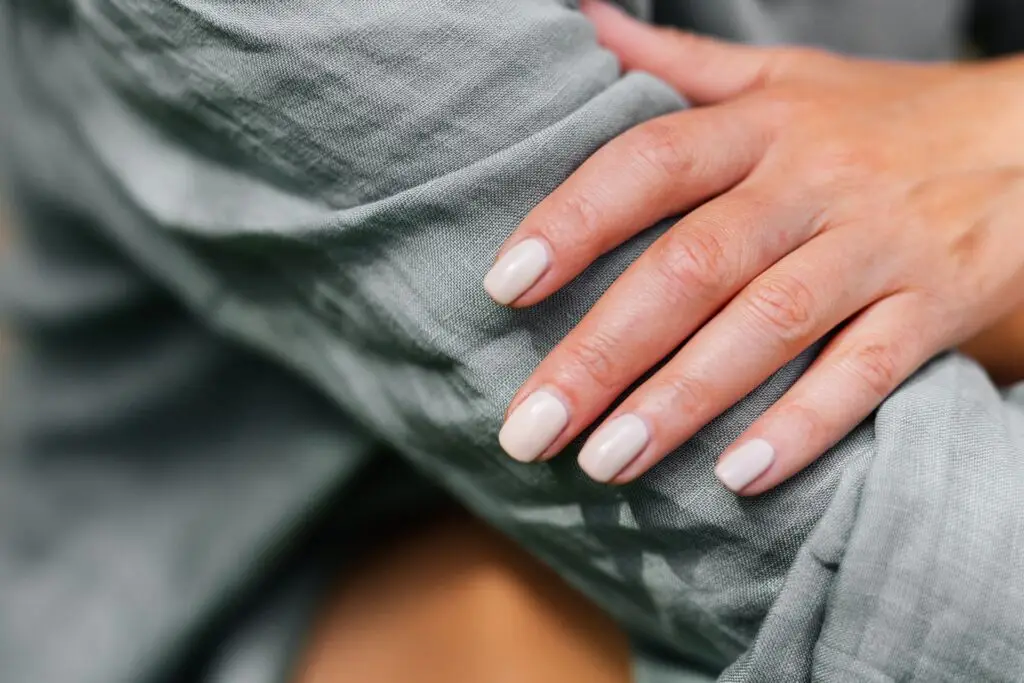
BIAB has a naturally glossy, slightly domed finish. It looks clean and refined. If you love the trending soap nails or glazed donut nail aesthetic, BIAB is one of the best bases to achieve it.
4. You can still wear nail polish on top.
Yes, really. BIAB works as a solid base, and you can apply regular or gel polish straight over it whenever you want a colour change. You get all the strength benefits without being locked into one look. We actually break this down in detail in our guide on putting nail polish on gel nails — the same rules apply here.
5. Not all technicians are trained in BIAB.
This is the one most people find out the hard way. BIAB requires specific application skills. Applying it too thick or too thin changes everything — the durability, the look, the removal experience. Always book with a technician who is certified in BIAB application specifically.
BIAB Nails vs Gel Manicure: A Quick Comparison
| BIAB Nails | Traditional Gel | |
| Nail health | Strengthens & protects | Can weaken over time |
| Wear time | 3–4 weeks | 2–3 weeks |
| Flexibility | High — moves with the nail | Lower — more prone to lifting |
| Removal | Gentle when done correctly | Acetone soak, can cause damage |
| Finish | Glossy, domed | Flat, glossy |
| Best for | All nail types | Normal to strong nails |
If you’re still unsure which direction to go, our round-up of trending gel manicure nail designs is worth a look — you can apply most of those designs right over a BIAB base too.
How Long Do BIAB Nails Actually Last?
Most people get three to four weeks of wear from a BIAB manicure. Some get even longer depending on their nail growth rate and lifestyle.
The key factors that affect longevity are nail prep, application quality, and aftercare. Dry cuticles and skipping base prep are the two biggest culprits behind early lifting. Speaking of which — if you’re still cutting your cuticles before a manicure, please stop. Use a cuticle remover instead — it makes a significant difference to how well any overlay adheres and lasts.
Can You Do BIAB Nails at Home?
Technically, yes. BIAB products are available to purchase. But here’s the real talk — the learning curve is steep.
Getting the application thickness right takes practice. Too thin and you lose the strengthening benefit. Too thick and it looks unnatural and lifts faster. Most at-home attempts end in frustration the first few times.
If you’re keen to try it yourself, start by investing in a quality LED lamp, a proper nail prep kit, and a reputable BIAB product. Watch detailed tutorials from certified nail techs before you begin.
For most people though, the salon experience delivers far better results — especially in the beginning.
What to Expect at Your First BIAB Appointment
Here’s what a typical BIAB appointment looks like:
- Nail prep — your technician cleans, files, and pushes back cuticles
- Dehydration — a primer or dehydrator is applied to remove oils from the nail plate
- BIAB application — one or two coats are applied and cured under an LED lamp
- Finishing — the surface is filed smooth and a top coat is applied
- Final cure — everything is sealed under the lamp
The whole process takes about 45–60 minutes. Removal at your next appointment adds around 15–20 minutes on top.
BIAB Nails Aftercare — What You Should Be Doing
The work doesn’t stop when you leave the salon. Good aftercare makes the difference between three weeks of flawless nails and ten days of lifting.
- Apply cuticle oil daily — this keeps the skin around your nails healthy and prevents lifting at the edges
- Wear gloves when cleaning or washing dishes
- Avoid using your nails as tools (yes, we all do it)
- Don’t pick or peel — if a nail lifts, book a repair rather than fixing it yourself
These habits are simple. But they genuinely extend the life of your BIAB manicure significantly.
Final Thoughts
BIAB nails aren’t a trend. They’re a smarter way to wear a manicure.
They protect your natural nails instead of weakening them and last longer. They look better for more of that time. And they’re flexible enough to work with your lifestyle — whether you paint over them, leave them bare, or style them into any finish you love.
The nail world is quietly changing. And honestly? It’s about time.
If you haven’t tried BIAB yet, book that appointment. Your nails — and your future self — will be glad you did.
Explore more nail and beauty content at Glamor & Living.